
Rally Obedience: The Dog Sport That Makes Obedience Training Fun
If traditional obedience feels like a formal exam, rally is the take-home project. You navigate a course of stations at your own pace, talk to your dog the entire time, and the focus is on teamwork rather than rigid precision. It is obedience training for people who want to enjoy the process.
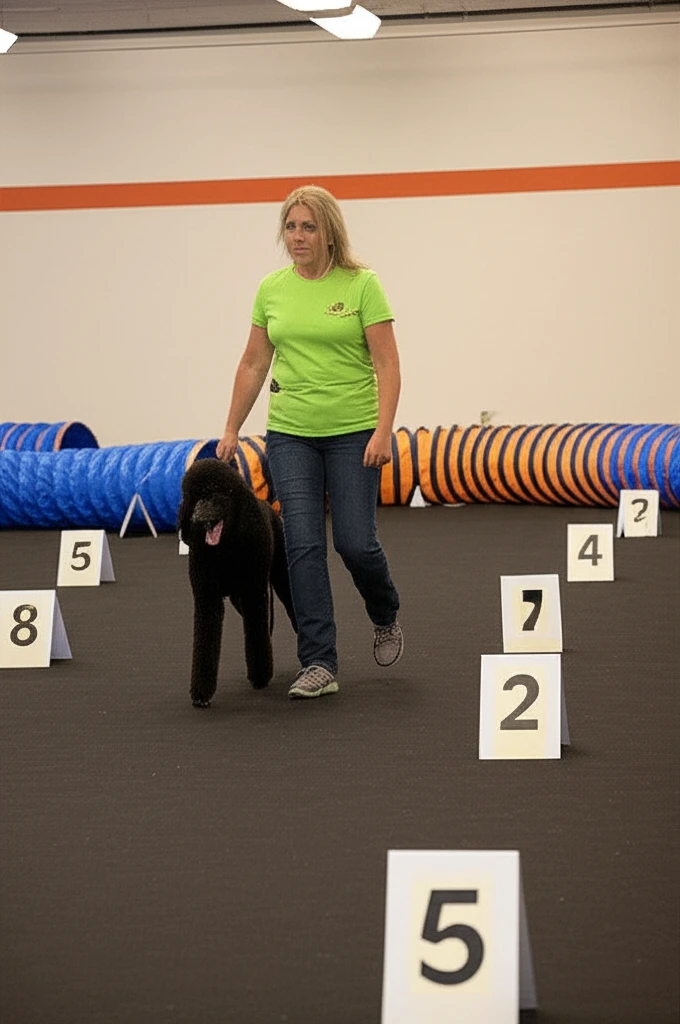
What Rally Obedience Actually Is
Rally obedience (usually just called "rally") is a dog sport where you and your dog navigate a course of 10 to 20 numbered stations. Each station has a sign telling you what to do: halt and sit, turn right, spiral left around three cones, call your dog to front, do a 270-degree turn, send your dog over a jump, and dozens of other exercises depending on the level. You move through the stations in order at your own pace, and unlike traditional obedience, you are allowed and encouraged to talk to your dog throughout the course.
That last detail is what makes rally so different from competitive obedience. In traditional obedience, you give a single cue and the dog must respond without additional encouragement. Repeated cues are penalized. In rally, you can praise, encourage, repeat cues, and use body language freely. The result is a sport that feels like a conversation between you and your dog rather than a test of silent compliance. This makes rally far more accessible to pet dog owners who want a structured activity without the pressure of competition-level precision.
Rally was developed specifically to bridge the gap between basic pet obedience and the competitive obedience ring. It rewards teamwork and a willing partnership between handler and dog rather than demanding the split-second precision of formal competition. Deductions happen for things like tight leashes, dogs significantly out of position, or handlers performing an exercise incorrectly, but the overall tone is encouraging and forgiving.
The Skills You Need (and Already Have)
If your dog knows how to sit, lie down, stay, walk on a loose leash, and come when called, you have the foundation for rally. That is genuinely all you need to start a Novice-level rally class. The sport builds complexity on top of these basics, so by the time you are performing 270-degree turns and moving stands, you and your dog will have worked up to it gradually.
Loose-leash walking is the single most important rally skill because you are moving between stations with your dog in heel position. But rally heeling is not the rigid, eyes-locked-on-handler precision of formal obedience. Your dog needs to stay on your left side, keep a reasonable pace, and not pull on the leash. If your dog can walk beside you without dragging you down the street, you have a starting point.
Impulse control is woven into every rally exercise. Your dog must hold a sit-stay while you walk around them, wait in a down while you move to the next station, and resist the temptation to sniff the signs, greet other teams, or wander off course. These are the same impulse control skills that make life with a dog easier in every context, and rally gives you a structured, motivating way to practice them.
The handler skills you develop in rally are equally valuable. You learn to read a course and plan your path, time your cues for smooth transitions, and manage your body position so your dog can read your intentions clearly. These handling skills transfer directly to other dog sports like agility and to everyday situations where clear communication with your dog matters.
AKC Rally Levels: What the Progression Looks Like
AKC Rally has four main levels, each adding complexity and reducing handler support.
Novice. All exercises are performed on leash. Stations include basic skills like halt-sit, halt-down, right turn, left turn, about turn, call front (your dog comes to face you and then swings back to heel), and a moving side step. The course has 10 to 15 stations. You can talk to your dog freely, and food and toys are not allowed in the ring but can be given between exercises at some fun matches. This level is very achievable for most pet dogs with basic obedience training.
Intermediate. A newer level that bridges Novice and Advanced. Still on leash, but with more complex exercises including offset serpentines, 360-degree turns, and a halt-sit-walk around. This level introduces the kind of precision and sequencing that prepares teams for off-leash work.
Advanced. All exercises are performed off leash. The course has 12 to 17 stations and includes a jump, more complex heeling patterns, and a honor exercise where your dog holds a stay while another team runs the course. The off-leash element requires a higher level of engagement and reliability from your dog.
Excellent and Master. The highest levels add backing up, moving stands, distance exercises, and even more complex sequences. These levels test a deep working partnership and advanced handler skills.
You do not need to compete to benefit from rally training. The structured progression gives you clear goals to work toward, and the exercises are practical skills that improve your dog's real-world behavior. A dog who can hold a sit-stay while you walk a full circle around them is a dog who can wait calmly while you talk to a neighbor on a walk. A dog who can perform an off-leash recall to front is a dog who comes when called in the park.
Why Group Classes Are the Best Rally Prep
Rally is a sport designed to be performed in stimulating environments: a ring full of signs, other teams watching from ringside, the scents and sounds of a competition venue. Practicing heelwork in your quiet living room is a fine starting point, but it does not prepare you or your dog for the real thing. Group classes do.
In a group class, your dog practices heeling, stays, and recalls with other dogs working nearby. This is the exact level of distraction they will encounter in a rally ring, and exposure to it in a training context builds the focus and reliability you need. A dog who can hold a sit-stay while the team next to them is performing a recall has practiced impulse control in conditions that match competition demands.
Group classes also give you instructor feedback on your handling. In rally, many deductions come from handler errors: performing an exercise incorrectly, getting in your dog's way during a turn, or moving before your dog has completed a station requirement. An instructor watching your performance can catch these errors before they become habits.
Zoom Room's group class format is excellent rally preparation. The indoor gym provides a distraction-rich environment where you and your dog practice the focus, heelwork, and cue responsiveness that rally demands. Classes are structured so every team gets individual coaching while benefiting from the group dynamic. Whether you are working toward competition or just want a structured way to deepen your dog's training, rally builds a partnership that shows in everything you do together.
If your dog has already earned a Canine Good Citizen title, you are well positioned for rally, as many of the CGC skills overlap with Novice rally requirements. And if your dog has not, rally training will get you most of the way there. The two programs complement each other and share a foundation of polite, responsive behavior in public settings.
Getting Started with Rally
The barrier to entry for rally is genuinely low. If your dog can sit, down, come, and walk on a loose leash, you can start a Novice rally class tomorrow. Here is how to set yourself up for success.
Practice heeling at home. Walk around your house and yard with your dog on your left side, rewarding them frequently for staying in position. Practice turns: right turns (you turn into your dog), left turns (you turn away from your dog), and about turns (180-degree reversals). These are the building blocks of course navigation. Keep sessions to five minutes and use a high reinforcement rate so your dog learns that staying beside you is the most rewarding place to be.
Build solid stays. Rally requires sit-stays and down-stays of increasing duration and with increasing distractions. Start in a boring environment with short durations and gradually add distance, duration, and distraction. If your dog breaks the stay, reduce the difficulty and try again. A reliable stay is a safety skill and a rally essential.
Work on fronts and finishes. A "front" is when your dog comes to sit directly in front of you, facing you. A "finish" is when they move from front position back to heel position on your left side. These transitions are used at multiple stations in rally and are worth practicing early.
Then find a class. Enrichment is always more effective with professional guidance, and rally is no exception. A structured class environment gives you the distraction practice, instructor feedback, and course experience that home training cannot replicate. Explore Zoom Room's training programs to find rally prep, obedience, and foundation skills classes. Find a Zoom Room near you and discover how much fun obedience can be when it is set to a rally course.
Frequently Asked Questions
Can mixed-breed dogs compete in AKC Rally?
Yes. Mixed-breed dogs can compete in AKC Rally through the AKC Canine Partners program. This listing is available to all dogs, including rescues and dogs without pedigree documentation, and it provides access to rally, agility, obedience, and many other AKC companion events. Registration is simple and can be done online. Mixed-breed dogs compete in the same classes and earn the same titles as purebred dogs. There is no distinction in scoring or eligibility once your dog is registered.
How is rally different from regular obedience competition?
The biggest differences are handler communication and pacing. In traditional obedience, you give a single cue and any additional cues or encouragement result in point deductions. In rally, you can talk to your dog continuously, repeat cues, clap, pat your leg, and use enthusiastic body language throughout the course. You also move at your own pace in rally, while traditional obedience exercises are performed on the judge's orders. This makes rally feel much more like a team activity and less like a formal test. Rally courses also change at every trial, so you and your dog encounter a new sequence of exercises each time.
How long does it take to be ready for a rally trial?
For a dog with basic obedience skills, most teams can prepare for a Novice rally trial in two to four months of regular practice. This assumes you are taking a weekly class and practicing at home several times per week. If your dog already has solid heeling, stays, and recalls, the main preparation is learning rally-specific exercises and getting comfortable performing them in sequence. Some teams enter their first trial sooner, while others prefer more preparation time. There is no rush, and many handlers find that the training journey is more rewarding than the competition itself.
Ready to Try Rally?
Zoom Room's group classes build the heelwork, focus, and handler communication skills that make rally obedience achievable and fun. Train alongside your dog in a supportive indoor environment with expert coaching.
Find a Zoom Room