
Trick Training for Dogs: Why Tricks Are the Most Underrated Training Tool
People dismiss trick training as frivolous, the dog-training equivalent of party tricks. But the dog who can spin on cue, hold a chin rest at the vet, and settle on a mat in a crowded coffee shop? That dog was built through trick training. And they are having a better time than the dog who only knows sit, down, and stay.
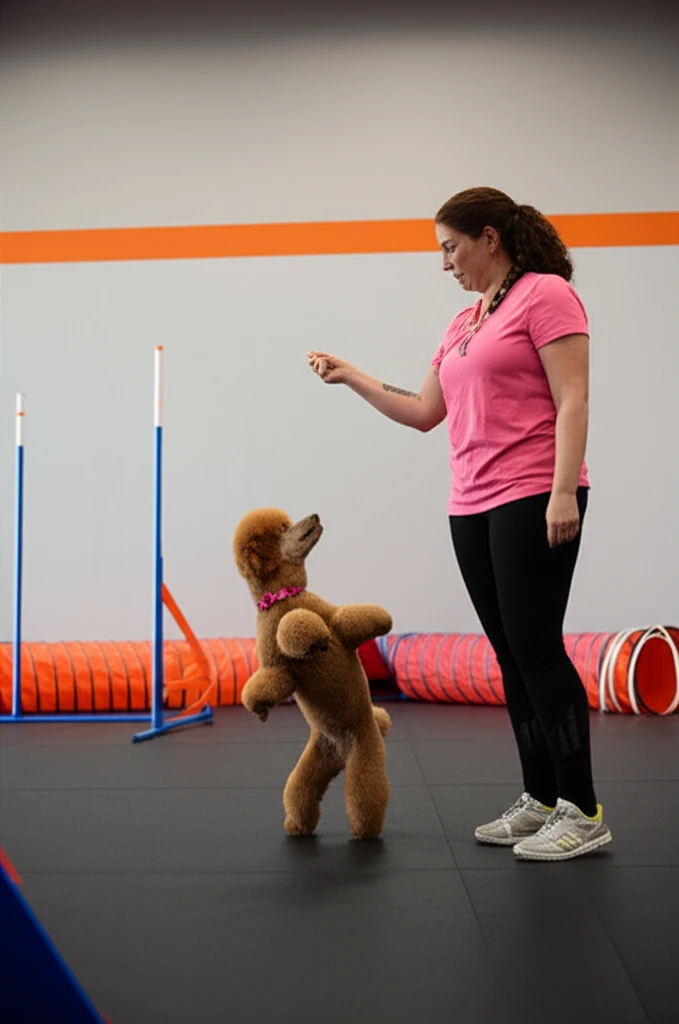
Tricks Are Training. Training Is Tricks.
There is no meaningful difference between teaching your dog to shake and teaching them to stay. Both involve breaking a behavior into small steps, marking the correct response, and reinforcing it until it is reliable. The only distinction is cultural: we call some behaviors "obedience" and others "tricks," and we treat the first category as serious and the second as optional. That is a mistake.
Trick training develops the same skills that make a well-behaved dog: focus, impulse control, the ability to follow multi-step cues, and the habit of checking in with you for guidance. It does all of this while being inherently more engaging for both you and your dog, because tricks are novel and creative rather than repetitive. A dog who has been drilled on sit-stay for the hundredth time is compliant but bored. A dog who is learning to weave between your legs for the first time is engaged, thinking, and actively problem-solving.
This is also why trick training is one of the most effective forms of mental enrichment. Every new trick is a puzzle your dog has to solve. The process of figuring out what you want, through shaping and luring, exercises the same cognitive circuits as food puzzles and scent work. A five-minute trick training session leaves your dog more mentally satisfied than 20 minutes of fetch.
Where to Start: Foundation Tricks
Begin with tricks that are easy to lure, produce quick success, and build skills you will use later.
Spin. Hold a treat at your dog's nose level and slowly lure them in a circle. Mark and reward when they complete the full turn. Once the motion is smooth, add the cue "spin" and fade the lure into a hand signal. This trick teaches your dog to follow a lure precisely and introduces the concept of completing a behavior chain for a reward.
Shake (paw). Hold a treat in your closed fist at your dog's chest level. Most dogs will paw at your hand to get the treat. The instant they lift their paw, mark and reward. Once the paw lift is reliable, open your other hand and catch the paw as it comes up, shaping the behavior into a handshake. Shake is one of the fastest tricks to teach and it builds your dog's willingness to offer behaviors, which is the foundation of all shaping.
Bow (play bow). With your dog standing, hold a treat at their nose and slowly lower it straight down between their front paws. Most dogs will fold their front legs down while keeping their rear end up. Mark that position and reward. If your dog lies all the way down instead, you can use a hand or arm under their belly to prevent the down, or work on a surface with a slight elevation for their front paws. The bow is useful as a stretch, a greeting behavior, and a way to signal play to other dogs.
Touch (nose target). Present your open palm near your dog's face. Most dogs will investigate it with their nose. Mark the instant their nose makes contact and reward from the other hand. Touch is the most versatile foundation trick because it becomes a tool for teaching everything else: you can use a hand target to guide your dog into positions, through obstacles, and onto specific spots. It also becomes a recall booster, because a dog who has been heavily reinforced for touching your hand will run toward your outstretched palm in distracting environments.
Building Complexity: Shaping and Chaining
Once your dog understands the basic game of offering behaviors and earning rewards, you can start building more complex tricks using two powerful techniques: shaping and chaining.
Shaping means rewarding successive approximations of the behavior you want, without luring or guiding your dog into position. You wait for your dog to offer something close to the target behavior, mark it, and gradually raise the criteria. Want to teach your dog to close a cabinet door? Start by rewarding any interaction with the door: looking at it, moving toward it, touching it with their nose. Then only reward nose touches. Then only reward nose pushes that move the door. Then only reward pushes that close it fully. Shaping develops a dog who actively experiments and problem-solves rather than waiting to be shown what to do. It is the trick training technique that produces the most creative, engaged dogs.
Chaining means linking several behaviors together into a sequence that your dog performs on a single cue. Your dog already does basic chains: sit, then down, then roll over. Advanced chains can be remarkably impressive. A dog who fetches your slippers is performing a chain: go to the bedroom, find the slippers, pick them up, bring them to you, and release them into your hand. Each link in the chain was taught separately, then connected using backchaining (teaching the last step first and working backward) or forward chaining (teaching each step in order).
The key to both techniques is patience and rate of reinforcement. During shaping, reward frequently in the early stages so your dog stays motivated to keep offering behaviors. If your dog stops and stares at you, your criteria jumped too fast. Go back to the last step they were succeeding at and build more gradually. During chaining, practice each individual link until it is fluent before connecting it to the next one. A chain is only as strong as its weakest link, and rushing the process produces a dog who falls apart midway through the sequence.
Tricks with Real-World Value
Some tricks are not just impressive, they are genuinely useful in everyday life. Prioritize these if you want training that pulls double duty.
Chin rest. Your dog places their chin in your open hand and holds it there. This is invaluable for veterinary visits, grooming, and nail trims. A dog who has been trained to voluntarily rest their chin in a hand is cooperating with handling rather than being restrained. It gives them a sense of control (they can lift their chin to opt out at any time) and turns stressful procedures into cooperative ones. Veterinary behaviorists increasingly recommend chin rests as part of cooperative care protocols.
Go to mat. Your dog goes to a specific mat or bed and lies down. This is the ultimate settling skill. Once trained, you can bring the mat anywhere: a restaurant patio, a friend's house, a hotel room, a vet waiting room. The mat becomes a portable cue that means "relax here." It is impulse control, place training, and calm-down protocol all in one behavior.
Middle (stand between your legs). Your dog walks between your legs and stands facing forward. This is a safety position for dogs who are nervous in crowded environments. It gives them a physical buffer from the world while keeping them connected to you. It is also a great way to control your dog's position in tight spaces without leash pressure.
Leave it and drop it. Technically obedience cues, but they are best taught as trick-training games. A solid leave it (turning away from something desirable on cue) and drop it (releasing an item from their mouth on cue) are safety behaviors that prevent your dog from eating something dangerous or guarding a stolen item.
The beauty of positive reinforcement-based trick training is that your dog associates every new skill with a good experience. A chin rest taught with treats and patience creates a dog who offers the behavior willingly. The same chin rest taught through force creates a dog who tolerates handling under duress. The method matters as much as the outcome.
Taking It Further: Classes and Titles
If you enjoy trick training at home, structured classes add the dimension of distraction and professional feedback that take your skills to the next level. Working on tricks in a group setting, surrounded by other dogs and handlers, is significantly harder than working in your quiet living room, and that difficulty is what makes the behaviors more reliable in the real world.
The AKC offers a Trick Dog titling program with multiple levels: Novice, Intermediate, Advanced, Performer, and Elite Performer. Each level requires demonstrating a certain number of tricks from a published list. The Novice level includes basics like shake, spin, and speak, while the Performer and Elite levels require complex chains, distance work, and creative routines. Do More With Your Dog (DMWYD) offers a similar titling program that is open to all dogs, including mixed breeds. Both programs provide a structured progression that keeps trick training challenging and goal-oriented.
Zoom Room's trick training classes teach tricks in a group format with an instructor guiding your timing, shaping criteria, and cue mechanics. You train alongside your dog, building the communication skills that make you a better handler in every context. Whether your goal is a formal title, a more confident dog, or simply a way to tire out your dog's brain on a rainy Tuesday, trick training delivers. Explore Zoom Room's training classes and find out how much fun training can be when you stop taking it so seriously. Find a Zoom Room near you.
Frequently Asked Questions
How many tricks can a dog learn?
There is no known upper limit. Dogs are capable of learning hundreds of distinct behaviors. Research on language-trained dogs has demonstrated vocabularies of over 1,000 words, suggesting the capacity for learned behaviors is vast. In practice, the limiting factor is almost always the handler's time and creativity, not the dog's ability to learn. Most pet dogs know between 10 and 30 cues, but dogs actively engaged in trick training programs often know 50 or more. Each new trick also gets easier to teach because your dog becomes more skilled at the learning process itself.
My dog gets frustrated and gives up during trick training. What am I doing wrong?
Frustration usually means the criteria jumped too fast. Your dog was succeeding at one step, and you moved to a harder step before they were fluent. The fix is to go back to where your dog was last succeeding and stay there longer before increasing difficulty. Also check your rate of reinforcement. If your dog is going more than a few seconds without earning a reward during a shaping session, you are asking too much. Short sessions of three to five minutes with a high success rate build enthusiasm. Long sessions with low success rates build frustration. End every session on a successful repetition so your dog associates training with winning.
Are some dogs too old to learn tricks?
No. Dogs learn throughout their entire lives, and older dogs often make excellent trick students because they have better focus and impulse control than puppies. A senior dog may need physical modifications, lower jumps, no rolling over if they have joint issues, softer surfaces, but the cognitive component of trick training is fully accessible at any age. In fact, trick training is one of the best ways to maintain cognitive function in aging dogs. The mental challenge of learning new behaviors helps keep the brain active and can slow the progression of cognitive decline.
Ready to Teach Your Dog Something New?
Zoom Room's trick training classes teach you how to shape, lure, and chain behaviors in a group setting with professional guidance. Your dog gets mental enrichment, you get better communication skills, and you both have fun doing it.
Find a Zoom Room