
Why Your Dog Is Scared of the Vet and How to Help
Your dog is not being dramatic. The trembling in the waiting room, the resistance on the exam table, and the panic when a stranger in a lab coat reaches for them are all real stress responses rooted in real experiences. Vet anxiety is one of the most common behavioral challenges dog owners face, and it is also one of the most fixable.
Why Dogs Develop Vet Anxiety
The veterinary clinic is a perfect storm of anxiety triggers. It combines unfamiliar smells (antiseptic, other animals' stress hormones, medical chemicals), unfamiliar sounds (barking in the waiting room, equipment, the high pitch of clippers), loss of control (being placed on a slippery table, restrained by strangers), and pain (vaccinations, blood draws, examinations of sore areas). For a dog who has had even one overwhelming experience in that environment, every return visit activates the memory of the previous bad one.
This is not abstract. The anxiety response is neurological. When your dog enters the clinic and their body floods with cortisol and adrenaline, they are in a fight-or-flight state. A dog in that state cannot learn, cannot relax, and cannot cooperate, not because they are choosing defiance, but because their nervous system has overridden their ability to think clearly. Understanding this changes the conversation from "how do I make my dog behave at the vet" to "how do I help my dog feel safe enough that their brain stays online."
Some dogs develop vet anxiety from a single traumatic experience. Others build it gradually over years of mildly unpleasant visits. Puppies who missed the critical socialization window are more prone because unfamiliar environments and handling are already stressful for them. Dogs who are generally fearful often show the most intense vet anxiety because the clinic activates a baseline fear that is already elevated. And some dogs have handling sensitivity, meaning they are more reactive to being touched, held, or manipulated in ways they did not initiate, which makes veterinary procedures inherently more triggering.
The Cooperative Care Approach
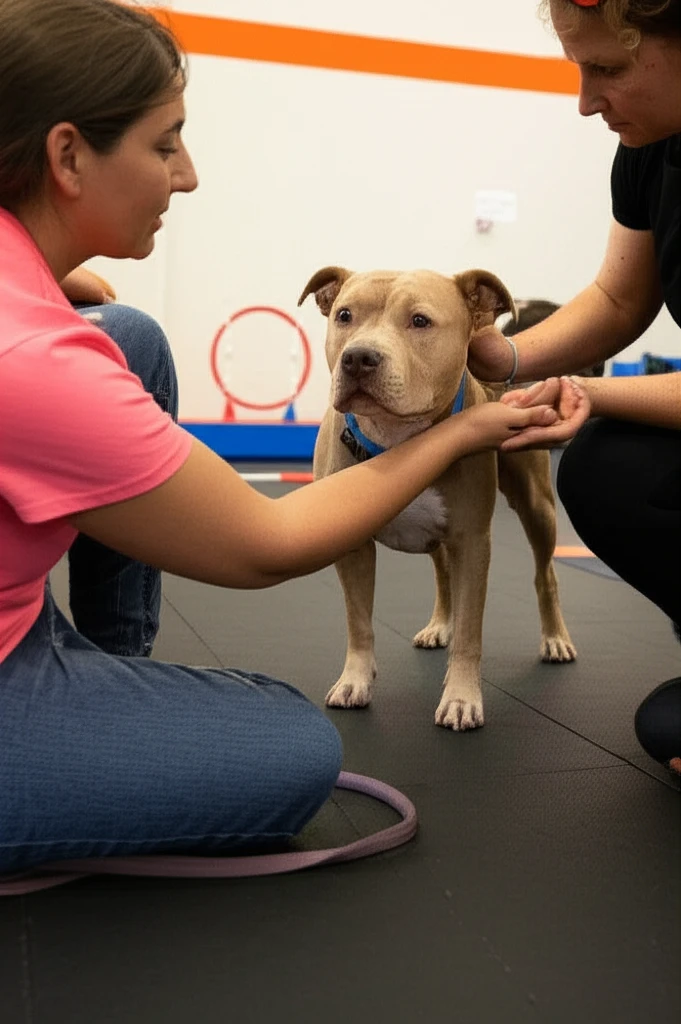
Cooperative care is a philosophy that treats your dog as a participant in their own handling rather than a patient who must simply endure it. The core principle is consent. Your dog learns specific behaviors, like a chin rest or a paw offer, that signal they are ready to proceed. When they hold the position, handling continues. When they break it, handling pauses. This gives your dog a predictable way to communicate discomfort without resorting to snapping, struggling, or shutting down.
The chin rest is the foundational cooperative care behavior. Teach your dog to rest their chin on your open hand and hold it there. Start at home in a relaxed setting: present your palm, lure your dog's chin onto it with a treat, and reward the moment their chin touches. Build duration gradually, one second at a time. Once the chin rest is reliable at home, practice it while gently touching ears, lifting lips, and handling paws. Then practice it in new environments. Eventually, this behavior travels to the vet's office, where it gives your dog a job to focus on and a clear way to say "I need a break."
Cooperative care takes time to teach, but it pays off across your dog's entire lifetime. A dog who understands the cooperative care framework tolerates not just vet visits but also grooming, nail trims, ear cleaning, medication administration, and any situation where they need to be handled. The investment in teaching these skills early, or rebuilding them after anxiety has already developed, is one of the highest-return training decisions you can make.
You do not need to do this alone. Professional trainers can help you build a cooperative care plan specific to your dog's triggers. At Zoom Room, handling exercises and body confidence are woven into our training curriculum because these skills matter in the real world, not just on an exam table.
Counter-Conditioning at the Clinic
Counter-conditioning changes your dog's emotional response to a trigger by pairing it with something overwhelmingly positive. In the context of vet anxiety, this means systematically replacing the association of "clinic equals pain and fear" with "clinic equals treats, praise, and nothing bad."
The most effective tool is the happy visit. Call your vet's office and ask if you can bring your dog in for brief, non-medical visits. Walk in, let the staff offer treats, sit in the waiting room for a few minutes, and leave. No exam, no needles, no handling. Some practices will let you use an empty exam room, where your dog can hop on the table, eat some cheese, and hop off. The goal is to flood the negative data bank with positive entries. If your dog visits the vet four times a year for appointments and twelve times a year for happy visits, the odds shift.
Start before you reach the building. If your dog starts panting and trembling in the parking lot, the parking lot is where your desensitization begins. Drive to the lot, feed high-value treats, and drive home. Do this until the parking lot is neutral. Then enter the lobby. Then approach the scale. Each step builds on the last. Rushing ahead before your dog is comfortable at the current level is not efficient. It is counterproductive, because it confirms that the clinic really is as bad as your dog suspected.
Read your dog's body language during every happy visit. The subtle signs of stress, lip licking, yawning, turning away, whale eyes, are your dog telling you where their threshold is. Stay below it. Push above it and you are not counter-conditioning. You are flooding, which makes anxiety worse.
Muzzle Training and When to Consider Medication
Muzzle training is one of the most underused and misunderstood tools for vet-anxious dogs. A muzzle is not a punishment. It is a safety device that protects your dog, the veterinary staff, and you. Even gentle dogs can bite when they are in pain, restrained, and terrified. A dog who is already comfortable wearing a basket muzzle can be muzzled quickly and calmly when needed, without the added stress of having an unfamiliar device forced onto their face during an already overwhelming moment.
Teach muzzle acceptance at home, weeks before any vet visit. Let your dog sniff the basket muzzle and feed treats through the openings. Hold the muzzle with a treat at the bottom and let your dog push their nose in voluntarily. Progress to buckling it briefly, feeding treats through it, and removing it. Build duration over many short sessions. A basket muzzle allows your dog to pant, drink, and take treats while wearing it. Your dog should look forward to the muzzle appearing because it predicts a training game, not dread.
Medication is the other tool that is underutilized because of stigma. Pre-visit pharmaceutical support, typically trazodone, gabapentin, or a combination, given a few hours before the appointment, can lower your dog's anxiety enough for them to actually benefit from the counter-conditioning and cooperative care work you are doing. Medication is not a failure of training. It is a tool that makes training possible for dogs whose anxiety is so high that they cannot take treats, cannot focus, and cannot do anything except panic. If your dog falls into that category, talk to your vet about a pre-visit medication protocol. The combination of medication, cooperative care training, and gradual socialization produces the best outcomes for dogs with established vet anxiety.
For dogs with extreme vet phobia, some veterinary behaviorists also recommend anxiolytic medication taken daily, not just before appointments, to lower the baseline anxiety level while behavioral modification is underway. This is a conversation to have with a veterinarian who specializes in behavior, not something to navigate on your own.
What You Can Do Before Every Appointment
Even while you are working on the long-term counter-conditioning plan, there are practical steps you can take to make each vet visit less stressful right now.
Request the first appointment of the day or the first after lunch. A quieter waiting room means fewer triggers. Ask if your clinic has a separate entrance or waiting area for anxious dogs. Some Fear Free certified practices offer this specifically to reduce exposure to other stressed animals.
Wait in the car instead of the lobby. Call the front desk when you arrive and ask them to text you when the exam room is ready. Walking your dog straight from the car into the exam room bypasses the waiting room entirely, which is often the most stressful part of the visit.
Bring your dog's favorite treats and ask the vet and technicians to use them. A continuous stream of high-value food during an exam gives your dog something to focus on besides the handling. If your dog is too anxious to eat, that is important diagnostic information. A dog who refuses food in a context where they normally eat is telling you their stress has exceeded their ability to cope, and the approach needs adjustment.
Ask your vet about Fear Free practices. Fear Free certified professionals are trained to minimize fear, anxiety, and stress during veterinary visits through low-stress handling, environmental modifications, and pre-visit medication protocols. If your current vet does not offer these approaches, it may be worth seeking one who does.
Prepare at home with the handling exercises described in our vet visit preparation guide. Touch ears, paws, belly, and mouth while pairing each touch with treats. The more your dog has practiced these touches in a calm setting, the less jarring they are when a veterinarian does the same thing under clinical conditions. Find a Zoom Room near you to build the handling confidence and socialization foundation that makes every vet visit easier.
Frequently Asked Questions
Is it normal for dogs to be scared of the vet?
Yes, vet anxiety is extremely common. Studies suggest that a significant proportion of dogs show signs of fear or stress during veterinary visits. The clinic environment combines nearly every anxiety trigger a dog can encounter: unfamiliar people handling them, strange smells, slippery surfaces, the sounds of other stressed animals, and procedures that may involve discomfort or pain. Some degree of wariness is expected, but severe anxiety where a dog is trembling, aggressing, or shutting down is a sign that active intervention through desensitization, cooperative care training, and potentially medication is needed. The anxiety typically gets worse over time if not addressed.
Should I stay in the exam room with my dog or leave?
Stay unless your vet specifically asks you to step out. Most dogs are calmer with their owner present because you are a familiar anchor in an unfamiliar environment. You can feed treats, practice a chin rest, and provide calm reassurance through your body language. Some dogs do escalate their stress behaviors when the owner is present because they are seeking rescue, but this is less common than the calming effect of your presence. If your vet asks you to leave for a specific procedure, ask why. In some cases it is a safety concern during restraint, which is valid. But routine exams and vaccinations generally go better with you in the room.
My dog is aggressive at the vet. What should I do?
Aggression at the vet is almost always fear-based, not a temperament problem. Your dog is not trying to dominate the veterinarian. They are trying to survive what feels like a threatening situation. Start with muzzle training at home so your dog is comfortable wearing a basket muzzle before the next visit. Talk to your vet about pre-visit anxiety medication to lower the stress level enough for your dog to cope. Request happy visits where nothing medical happens, so the clinic stops predicting only bad experiences. Consider a veterinary behaviorist for dogs whose aggression is severe, as they can create a comprehensive behavior modification plan. Never punish your dog for aggressing at the vet, because the aggression is a symptom of fear, and punishment increases fear.
Ready to Help Your Dog Feel Safer at the Vet?
Zoom Room's training classes build handling confidence, cooperative care skills, and broad socialization that make veterinary visits less stressful. You work alongside your dog with professional guidance in a controlled environment.
Find a Zoom Room