
How to Prepare Your Dog for the Vet: Cooperative Care and Stress-Free Visits
Your dog does not understand why a stranger is poking, prodding, and sticking them with needles. But they can learn that veterinary handling is safe, predictable, and followed by very good things. That shift does not happen in the exam room. It happens through the preparation you do long before the appointment.
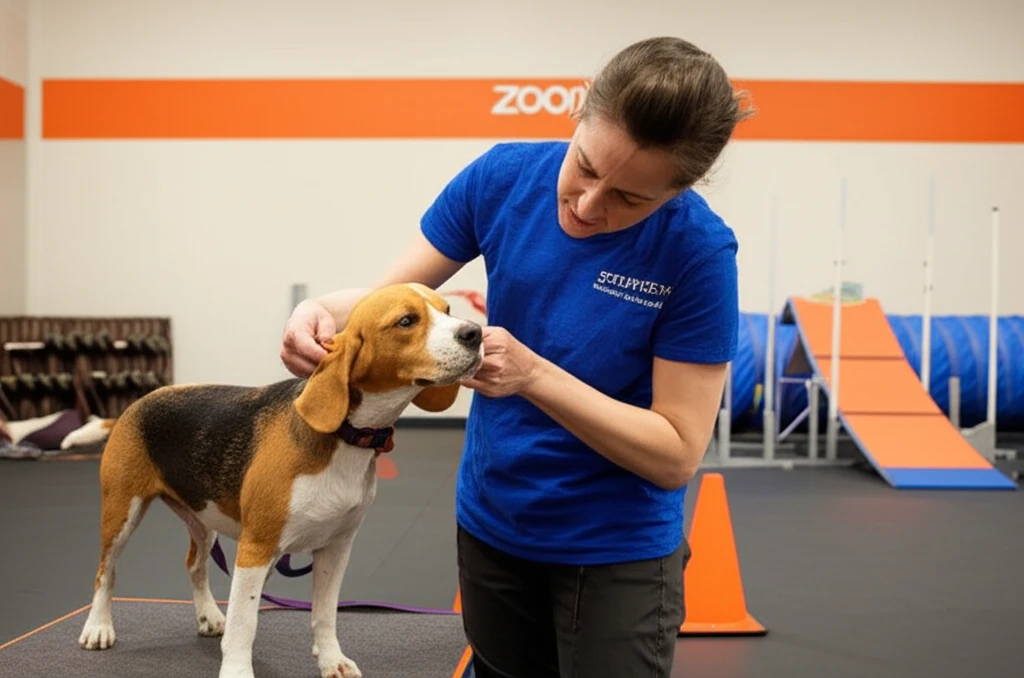
The Cooperative Care Philosophy
Cooperative care means teaching your dog to be a willing participant in their own handling rather than a patient who endures it. The difference matters. A dog who is held down for a blood draw and a dog who voluntarily rests their chin on a towel while a blood draw happens are both getting their blood drawn. But the first dog is learning that vet visits mean loss of control and discomfort. The second is learning that vet visits are predictable, that they have some agency in the process, and that good things follow.
The foundation of cooperative care is consent behaviors: specific positions your dog learns that signal they are ready to proceed. A chin rest, where your dog places their chin on your hand or a surface and holds it there, is one of the most versatile. When the chin stays down, handling continues. When the chin lifts, handling pauses. This gives your dog a clear, low-stress way to communicate "I need a break" without escalating to a growl, snap, or panic.
You do not need to be a professional trainer to teach cooperative care basics. Start at home with handling exercises, the same way you would prepare your dog for grooming. Touch ears, look in the mouth, lift paws, run your hands along the belly, and pair every touch with treats. The vet will need to do all of these things. If your dog has practiced them hundreds of times at home in a positive context, the exam room version is much less alarming.
Happy Visits and Low-Stakes Exposure
One of the most effective strategies for reducing vet anxiety is the happy visit: a trip to the veterinary clinic where nothing medical happens. You walk in, your dog gets treats from the reception staff, you sit in the waiting room for a few minutes, maybe step on the scale, and you leave. No exam. No needles. No thermometer. Just good experiences in the space that your dog currently associates with bad ones.
Call your vet's office and ask if they accommodate happy visits. Most practices will, and many actively encourage them. Some will let you bring your dog into an empty exam room, feed treats on the table, and leave. The goal is to dilute the negative associations with a large number of neutral or positive ones. If your dog goes to the vet four times a year for appointments and ten times a year for happy visits, the math shifts in your favor.
The car ride and the parking lot are part of the experience too. If your dog starts shaking the moment you turn into the clinic's parking lot, the anxiety started before you got out of the car. Drive to the clinic, sit in the parking lot, feed treats, and drive home. Repeat until the parking lot is no longer a trigger. Then go inside. Then approach the scale. Build each step on the success of the last one. This is the same gradual desensitization approach that works for fear-based behavior in any context.
Dogs who have been through structured socialization programs are often more resilient at the vet because they have practiced being handled by unfamiliar people in unfamiliar environments. They have a template for "new and different does not mean dangerous" that makes the vet's office less overwhelming.
Handling Exercises You Can Practice at Home
Veterinary exams involve specific types of handling that you can rehearse at home. The more your dog has experienced these touches in a relaxed, positive setting, the less reactive they will be when a veterinarian does the same thing.
Ears: Lift the ear flap, look inside briefly, and treat. Progress to gently touching the inside of the ear with a cotton ball. This mimics an ear exam and prepares for ear cleaning or medication application.
Mouth: Gently lift your dog's lip to expose the gums and teeth, then treat. Work toward holding the mouth open briefly. This prepares for dental checks and makes it easier to give oral medication.
Paws: Hold each paw, spread the toes, and touch the nail beds. This prepares for nail trims, paw pad checks, and blood draws from the nail quick in emergencies.
Body: Run your hands along your dog's sides, belly, and legs with gentle pressure. Press lightly on the abdomen. This mimics the palpation a vet performs during a physical exam.
Restraint: Gently hold your dog in a still position for a few seconds, then release and reward. Gradually extend the duration. This prepares for the brief restraint needed during vaccinations, blood draws, and other procedures.
For each of these, start with a version your dog is completely comfortable with, pair it with treats, and increase the duration and intensity only as your dog's comfort grows. If at any point your dog tenses up, pulls away, or shows stress signals, go back a step. The pace is set by your dog, not by your calendar. New dog owners benefit especially from building these habits early, before the first vet visit turns into a struggle that sets the tone for years of anxious appointments.
Muzzle Training: Safety, Not Punishment
Muzzle training is one of the most misunderstood and underused preparation tools for vet visits. A muzzle is not a punishment. It is a safety device that protects your dog, the veterinary staff, and you. Even the friendliest dog can bite when they are in pain, frightened, or restrained in an unfamiliar way. A dog who is already comfortable wearing a muzzle can be muzzled quickly and calmly if a procedure requires it, without the additional stress of having an unfamiliar device forced onto their face in an already overwhelming moment.
The key is teaching your dog to love the muzzle before they ever need it. Start by letting your dog sniff the muzzle and feeding treats through it. Then hold the muzzle open and let your dog push their nose in voluntarily to reach a treat at the bottom. Progress to buckling it briefly, treating through the muzzle, and unbuckling. Build duration gradually. A properly trained muzzle introduction takes a few weeks of short, positive sessions.
Use a basket muzzle, not a cloth or grooming muzzle. Basket muzzles allow your dog to pant, drink water, and take treats while wearing them. Cloth muzzles close the mouth shut and should only be used for very brief procedures under direct veterinary supervision. A basket muzzle your dog can eat through is a basket muzzle your dog can learn to wear happily.
Every dog should be muzzle trained, not because every dog is dangerous, but because every dog might someday need emergency veterinary care while in pain. A dog who has never worn a muzzle and is suddenly muzzled while injured and terrified is a dog whose stress has just doubled. A dog who already knows the muzzle means treat time barely notices it. That is the difference preparation makes.
How Socialization Reduces Vet Anxiety
Vet anxiety is rarely just about the vet. It is about unfamiliar people touching your dog, unfamiliar environments with strange sounds and smells, and the loss of predictability and control. Dogs who have been broadly socialized, meaning exposed to a wide range of people, places, surfaces, sounds, and handling during their critical development period and beyond, have a larger comfort zone. The vet's office falls within that zone more easily.
A dog who has practiced standing on different surfaces is less rattled by a slippery exam table. A dog who has been handled by multiple people during socialization classes is less alarmed when a stranger in a lab coat reaches for them. A dog who has heard clippers, blowers, and other novel sounds in a controlled, positive setting is less startled by the sounds of a veterinary clinic. None of this is about the vet specifically. It is about building a dog who can handle novelty without falling apart.
If your dog is already fearful at the vet, socialization alone will not fix it. You need the combination of happy visits, handling exercises, cooperative care training, and potentially collaboration between your trainer and your vet to build a specific plan. But socialization is what prevents the problem from developing in the first place, and it continues to pay dividends in every unfamiliar situation your dog encounters for the rest of their life.
Talk to your vet about Fear Free practices. The Fear Free certification program trains veterinary professionals in reducing fear, anxiety, and stress during visits. Fear Free certified clinics use techniques like pre-visit anxiety medication, low-stress handling, and environment modifications such as pheromone diffusers, non-slip mats, and separate waiting areas for dogs and cats. These practices complement the preparation work you do at home and create a veterinary experience your dog can genuinely tolerate. Find a Zoom Room near you to start building the handling confidence and socialization skills that make every vet visit easier.
Frequently Asked Questions
Should I ask my vet about anti-anxiety medication before appointments?
Yes, pre-visit medication is a legitimate and increasingly common option for dogs with significant vet anxiety. It is not a failure of training. It is a tool that reduces your dog's stress enough for them to have a better experience, which actually supports the long-term training process. Medications like trazodone or gabapentin, given a few hours before the appointment, can take the edge off without heavily sedating your dog. Talk to your vet about whether your dog is a candidate. Combining medication with cooperative care training and happy visits tends to produce the best results for dogs with established vet anxiety.
My dog is fine at the vet until they get a shot. How do I help with needle anxiety?
Practice the specific sensation at home. Gently pinch the skin at the scruff of your dog's neck, the same area where most injections are given, and immediately follow with a high-value treat. Repeat this in short sessions until the pinch predicts the treat. At the vet, ask if you can feed your dog a continuous stream of high-value treats during the injection so they are focused on eating rather than the needle. Some dogs do better when they cannot see the injection happening, so positioning your dog facing you while the vet approaches from behind can help. The goal is not to trick your dog. It is to change the emotional association with the sensation.
How often should I do happy visits to the vet?
For a dog with existing vet anxiety, aim for once a week for the first month or two, then taper to once or twice a month as your dog's comfort improves. For a puppy with no existing anxiety, monthly happy visits during the first year build a strong positive association before any negative experiences have a chance to take hold. Even well-adjusted adult dogs benefit from occasional happy visits, especially if they only go to the vet for annual exams and vaccinations. The more data points your dog has that say the vet's office is a treat dispensary, the less weight any single unpleasant experience carries.
Ready to Get Started?
Handling confidence, socialization, and cooperative care skills all start at Zoom Room. Our classes teach your dog to be comfortable with new people, new environments, and the kinds of handling that make vet visits and grooming less stressful for everyone.
Find a Zoom Room