
Australian Shepherd Barking: Redirecting the Herding Alarm System
Your Australian Shepherd barks at the mail carrier, the neighbor's cat, a leaf blowing across the yard, and sometimes at absolutely nothing you can identify. This is not a broken dog. This is a herding dog doing exactly what generations of breeding told them to do.
Why Barking Shows Up Differently in Australian Shepherds
Most dogs bark reactively — something startles them, and they vocalize. Australian Shepherds bark proactively. They are scanning the environment for anything that moves, changes, or seems out of place, and then announcing it. On a ranch, this made them invaluable. In your living room, it makes them exhausting.
Aussie barking is typically alert barking, not fear-based or aggressive. Your dog is not scared of the delivery truck. They are reporting it. They are also reporting the squirrel on the fence, the dog walking past the window, and the sound of your neighbor's garage door opening three houses away. Their sensory awareness is exceptional, and their threshold for "something worth announcing" is extremely low.
This is why generic stop-barking advice often fails with Aussies. Telling an Australian Shepherd to just be quiet is like telling a smoke detector to stop detecting smoke. The alarm system is doing its job. You need to change what triggers it and give your dog a different job to do when they notice something.
What Works for Australian Shepherds Specifically
The most effective approach with Aussies combines three elements: acknowledging the alert, redirecting the energy, and reinforcing the quiet.
Acknowledge, then redirect. When your Aussie barks at something, calmly say "thank you" or "I see it" in a neutral tone. Then give them a specific cue to do instead — "go to your mat," "find your toy," or "touch" (nose to your hand). You are not ignoring the bark. You are telling your dog that you received the message and now they can stand down. Many Aussie owners find that this acknowledgment alone reduces the duration of barking episodes, because the dog feels heard.
Build an incompatible behavior. A dog holding a toy in their mouth barks less effectively. Teach your Aussie to grab a specific toy when the doorbell rings or when they see movement outside. This gives the herding brain a task (retrieve the thing) that physically competes with barking. Practice this during calm moments first, then gradually introduce it during low-level triggers.
Reward silence actively. Most owners only notice barking — they never reward the quiet moments. Start catching your Aussie being calm. When they notice a trigger but do not bark, or when they stop barking after your acknowledgment cue, mark that moment and reward it. You are teaching them that noticing something and staying quiet pays better than sounding the alarm.
Avoid using punishment-based bark collars or yelling "quiet" repeatedly. With a breed this sensitive and intelligent, aversive methods damage trust quickly and often create new problems like anxiety or impulse control issues.
The Socialization Connection
A huge percentage of Aussie alert barking comes from under-socialization. Australian Shepherds are naturally reserved with unfamiliar people, dogs, and environments. When the world is full of things your dog has not been exposed to, everything becomes worth barking about.
Regular, positive exposure to new people, dogs, sounds, and environments raises your Aussie's threshold for what counts as noteworthy. A dog who has met dozens of friendly strangers in structured settings does not need to announce every person who walks past the house. A dog who has practiced calm behavior around other dogs does not need to bark at every dog across the street.
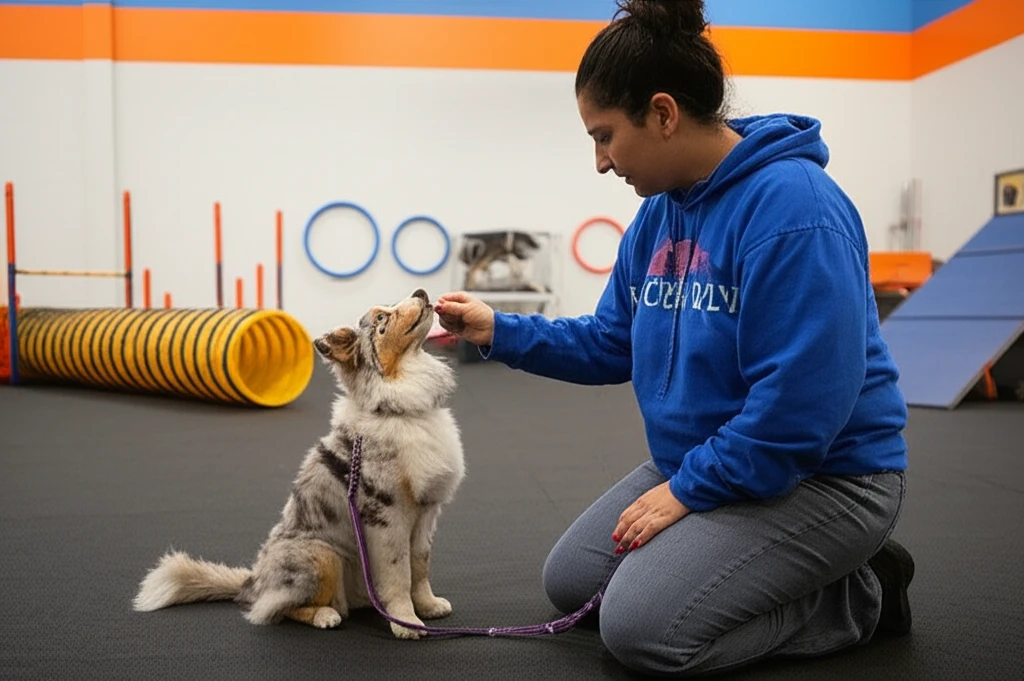
Group training classes are especially valuable for barking Aussies because they provide exactly the right kind of controlled exposure. Your dog learns to focus on you while other dogs and people move around them. Over time, the presence of others becomes background noise instead of a five-alarm event. Teaching calm in these environments gives your Aussie a default behavior to offer when they feel the urge to announce something.
At Zoom Room, our group classes give your Aussie structured practice in exactly the environments that trigger alert barking. Find a Zoom Room near you and start redirecting your Aussie's herding instincts into something productive.
Frequently Asked Questions
Will my Australian Shepherd ever stop barking completely?
No, and that should not be the goal. Australian Shepherds are a vocal breed, and barking is part of how they communicate. The realistic objective is reducing unnecessary barking and shortening barking episodes, not eliminating vocalization entirely. With consistent training, most Aussie owners see a dramatic reduction in alert barking within a few weeks. Your dog will still bark sometimes, but they will respond to your acknowledgment cue and settle more quickly.
My Aussie barks nonstop when I leave. Is that the same issue?
Barking when left alone is usually separation distress, not alert barking, and it requires a different approach. Alert barking happens when your dog is present with you and reacting to environmental triggers. Barking when alone is driven by anxiety about your absence. If your Aussie only barks excessively when you leave, look into separation anxiety protocols and crate training rather than alert barking strategies. The two issues occasionally overlap, but the training plans are different.
Ready to Quiet the Alarm System?
Zoom Room's group classes give your Australian Shepherd structured socialization and focused training that directly addresses alert barking. Work with trainers who understand herding breeds.
Find a Zoom Room