
How to Train an Australian Cattle Dog
Australian Cattle Dogs are not a breed you can coast with. They were developed to control thousand-pound animals in the harshest terrain on earth, and that working intensity doesn't disappear because you live in a suburb. If you don't give an ACD a job, they'll assign themselves one — and you won't like the job they pick.
The Nipping Problem: Why Your Cattle Dog Uses Teeth
Australian Cattle Dogs bite. Not aggressively — functionally. This breed was specifically developed to move stubborn cattle by nipping at their heels, then ducking the kick that follows. That bite-and-dodge sequence is hardwired into your dog's DNA, and it shows up early. ACD puppies nip hands, ankles, feet, pant legs, and anything else that moves. It's not a puppy phase that resolves on its own. It's a breed drive that needs active management for the life of the dog.
The mistake most ACD owners make is treating nipping like a generic puppy biting problem. Standard redirection works to a point, but with a Cattle Dog, you're dealing with a deeper instinct. The nipping intensifies during arousal, excitement, or frustration — exactly the moments when a working dog would be using their mouth on livestock. Running children, joggers, bicycles, and other dogs in motion all trigger the same response.
Redirect the mouth to appropriate targets relentlessly. Tug toys, flirt poles, and structured fetch give your ACD a sanctioned outlet for their oral drive. When nipping happens, freeze completely — movement triggers more nipping, so removing the stimulus is more effective than any verbal correction. Then redirect to a toy. Practice this hundreds of times. Literally hundreds. The instinct won't disappear, but with consistent redirection, your ACD can learn that teeth go on toys, not on skin. If the nipping is directed at children or guests and isn't improving, work with a trainer who understands herding breed drives before someone gets hurt.
Mental Stimulation: The Non-Negotiable
An Australian Cattle Dog without adequate mental stimulation is a wrecking ball with fur. This is one of the most intelligent breeds in existence, and that intelligence needs a constant outlet. A bored ACD doesn't just get restless — they get creative. Creative in the sense of disassembling your furniture, excavating your yard, opening cabinets, defeating child-proof locks, and developing elaborate escape routes from whatever containment you thought was adequate.
Destructive behavior in ACDs is almost always a symptom of insufficient mental engagement, not a character flaw. The dog who shredded your couch cushions isn't being spiteful. They're a working dog with nothing to work on. Physical exercise alone won't solve it, either. You can run an ACD for two hours and still come home to a dog who needs more — because their brain was idle the entire time their legs were moving.
Layer mental challenges into every day. Puzzle feeders, nose work, training sessions that require problem-solving, and hide-and-seek games with toys all engage the cognitive drive that physical exercise misses. Training new cues regularly is essential — ACDs master skills quickly and need the complexity to keep increasing. Once your Cattle Dog knows a cue reliably, start adding criteria: add distance, add duration, add distractions. If you train the same six cues the same way for months, your ACD checked out weeks ago.
Impulse control exercises serve double duty with ACDs. They provide mental challenge while also building the self-regulation that herding breeds need to function in a domestic setting. A Cattle Dog who can hold a stay while you toss a ball, wait at an open door, or settle on a mat while you eat dinner is a dog whose brain is getting a workout even in calm moments.
Living With a Velcro Dog Who Has Opinions
ACDs bond intensely with their person — often one person above all others. That loyalty is one of the breed's most valued qualities, and it creates a training dynamic unlike most other breeds. Your Cattle Dog is watching you constantly, reading your body language, anticipating your next move, and adjusting accordingly. That attentiveness makes them incredibly responsive to a skilled handler and incredibly frustrating for one who is inconsistent.
The flip side of that intense bond is that ACDs can be suspicious of strangers, wary of unfamiliar dogs, and reactive in new environments. Early and ongoing socialization isn't optional with this breed. Expose your ACD puppy to a wide variety of people, dogs, and environments while keeping every experience positive. A Cattle Dog who misses the socialization window often becomes a dog who is brilliant at home and difficult everywhere else.
ACDs also have opinions about how things should be done, and they'll communicate those opinions clearly. A Cattle Dog who disagrees with a training approach may refuse to comply, offer alternative behaviors, or simply disengage. This isn't stubbornness — it's a problem-solving dog who thinks they've found a better solution. Work with that tendency rather than against it. If your ACD is offering creative alternatives, you've got an engaged dog. Shape what they're offering rather than demanding compliance with a rigid plan.
If you also have or are considering an Australian Shepherd, you'll notice similarities in intelligence and drive, but the ACD is typically more intense, more handler-focused, and more physically mouthy. The training principles overlap significantly, but ACDs generally require more structured outlets for their herding instinct.
Exercise: Quality Over Quantity
ACDs need substantial physical exercise, but the type matters more than the duration. A mindless hour of fetch in the backyard is less valuable than a thirty-minute structured training walk where your ACD has to check in with you, practice cues, navigate obstacles, and process new environmental information. The goal is engagement, not exhaustion.
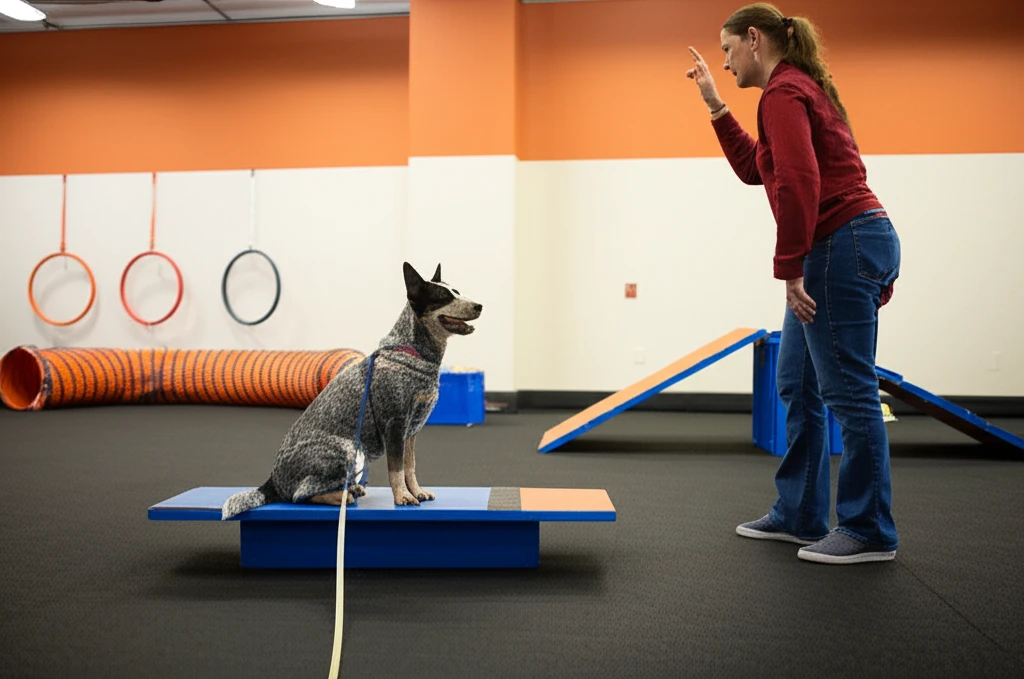
Agility is one of the best activities for Australian Cattle Dogs. It combines physical athleticism with rapid decision-making and handler communication — exactly the skill set this breed was built for. Urban herding provides a direct outlet for the herding drive using exercise balls instead of livestock. Both activities channel the ACD's working intensity into something productive and relationship-building.
Off-leash exercise requires reliable recall, and ACDs can be challenging to recall once they've locked onto something interesting. Build recall systematically: start in low-distraction environments, use high-value rewards, and never call your ACD to come for something unpleasant. A recall cue that sometimes predicts fun ending is a recall cue your ACD will start ignoring.
Zoom Room's training programs include agility courses and advanced obedience designed for high-drive breeds. The indoor environment eliminates weather disruptions and provides the consistent structure ACDs thrive in. Find a Zoom Room near you and give your Cattle Dog the physical and mental outlet they were built for.
This Is Not a Breed for Passive Ownership
Australian Cattle Dogs are magnificent dogs for the right owner — loyal, athletic, intelligent, and capable of a working partnership that few breeds can match. But they are not forgiving of neglect, inconsistency, or boredom. An under-stimulated ACD creates problems not because they're bad, but because they're too smart and too driven to do nothing.
If you're struggling, the problem almost certainly isn't your dog. It's the gap between what your Cattle Dog needs and what they're getting. Close that gap with more mental stimulation, more structured activities, and more outlets for the herding drive — and the destructive, nippy, reactive dog often transforms into the focused partner the breed is capable of being.
Structured group classes are particularly valuable for ACDs because they combine training, socialization, and mental challenge in a single session. For a breed that needs so much, classes that deliver on multiple fronts at once are an efficient investment of your training time.
Frequently Asked Questions
How do I stop my Australian Cattle Dog from nipping?
You manage it rather than eliminate it. The nipping instinct is a core breed trait developed over generations of cattle work. Redirect your ACD's mouth to appropriate targets like tug toys and flirt poles. When nipping happens, freeze completely — movement triggers more nipping — then redirect to a toy. Be consistent and expect this to take hundreds of repetitions over months. Increase physical and mental exercise, since nipping escalates when your ACD is under-stimulated. If the nipping is directed at children or is breaking skin, work with a trainer experienced with herding breeds. The instinct can be managed effectively, but it requires a long-term, consistent approach.
Are Australian Cattle Dogs good family dogs?
ACDs can be excellent family dogs for active families who commit to training and mental stimulation. The primary concern with families is the nipping — Cattle Dogs may nip running children, which is a herding instinct triggered by movement, not aggression. Children need to be taught not to run from the dog, and the dog needs consistent redirection to appropriate outlets. ACDs also bond strongly, sometimes preferring one family member, and need thorough socialization to be comfortable with visitors and other children's friends. They are best suited for families who are active, experienced with dogs, and prepared for ongoing training.
How much exercise does an Australian Cattle Dog need?
An adult ACD needs one to two hours of daily activity, but the type of exercise is more important than the duration. Physical exercise alone will not satisfy this breed. You need to include activities that engage their brain: training sessions, puzzle toys, nose work, agility, or structured games that require problem-solving. A twenty-minute training session where your ACD has to think hard is more tiring than an hour of running. The most common mistake ACD owners make is providing plenty of physical exercise while neglecting mental stimulation, which produces a fitter dog who is still restless and destructive.
Ready to Get Started?
Zoom Room's indoor training facility offers agility, advanced obedience, and structured activities built for high-drive working breeds. Find a location near you and give your Australian Cattle Dog the job they need.
Find a Zoom Room