
How to Train a Border Collie
Border Collies don't have behavior problems. They have employment problems. The smartest breed in the world needs a job, and if you don't give them one, they'll promote themselves to household manager — and their management style will involve destroying your couch, herding your children, and reorganizing your garden.
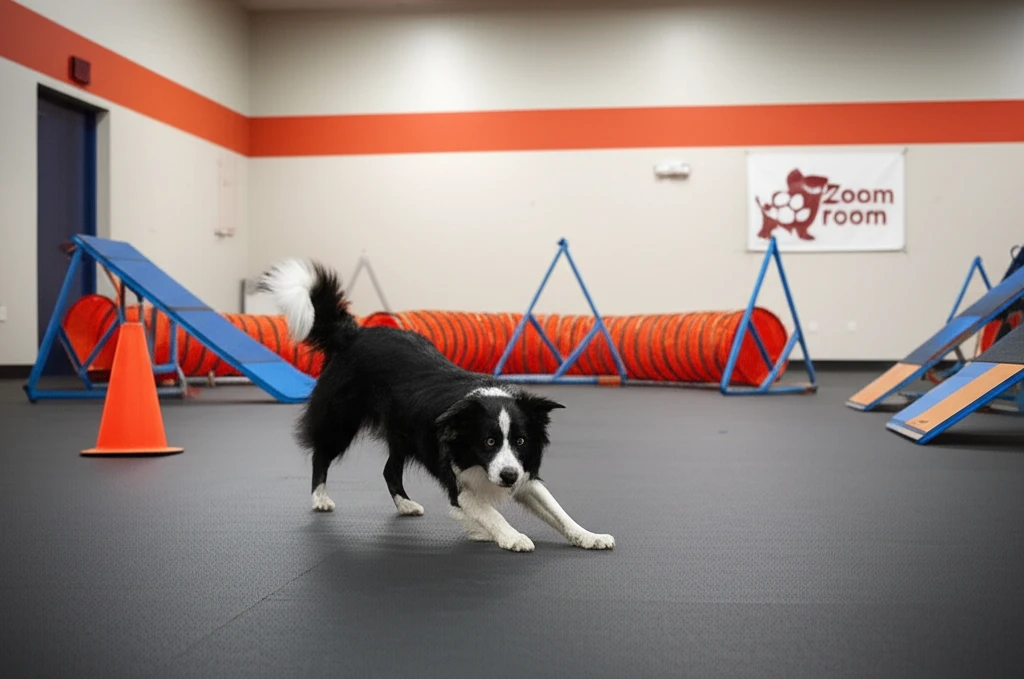
You Don't Have a Dog Problem. You Have an Enrichment Problem.
Border Collies are consistently ranked as the most intelligent dog breed, and that intelligence is not a party trick. It's an operational system refined over centuries to manage hundreds of sheep across rough terrain — reading the flock's body language, anticipating movement, making split-second decisions, all day, every day.
Your Border Collie still has that processing power. There are no sheep, no terrain to cover, and no eight-hour working day to fill. That cognitive engine is running full speed with nowhere to go. Usually it finds whatever creates the most chaos in your household.
Destructive chewing, obsessive behaviors (shadow chasing, tail spinning), herding family members, and incessant barking are all symptoms of the same problem: a brain that isn't being used enough. These aren't signs of a bad dog. They're signs of a brilliant dog who is profoundly bored. The fix isn't more exercise. It's more thinking.
A fifteen-minute training session that requires your Border Collie to learn something new will tire them more effectively than an hour-long run. Puzzle feeders, scent detection games, trick chains, and canine sports like agility aren't recreational extras — they're mental health maintenance.
The Herding Drive Is Always On
Your Border Collie's herding instinct is not a behavior you can train out. It's the breed's core operating system. The stare. The crouch. The calculated positioning. The quick dart to cut off movement. The nip to redirect. If you have a Border Collie, you've seen all of this directed at your kids, other pets, joggers, cyclists, or anything else that moves in a pattern your dog decides needs correcting.
The stare is the signature behavior. Border Collies use an intense, fixed gaze to control sheep, and they'll deploy it on anything they're trying to manage. When the stare doesn't produce the desired movement, the Border Collie escalates: circling, body blocking, nipping. This sequence is hardwired. You're not going to eliminate it. But you can redirect it.
Give the herding drive a sanctioned outlet. Agility channels the drive to move with speed and precision into a structured course. Urban herding with exercise balls lets your dog direct an object instead of a person. Impulse control training teaches your Border Collie to watch movement without engaging — to hold the stare without launching into the chase sequence. This skill alone will dramatically reduce unwanted herding at home.
If your Border Collie shares your home with cats, small dogs, or children, managing the herding drive isn't optional. Use baby gates during high-energy times. Redirect the instant you see the stare lock on. And invest heavily in outlets that channel the drive appropriately.
They Learn Too Fast (And That's a Problem)
Most breeds need multiple repetitions to learn a new cue. Your Border Collie needs two or three. That sounds like an advantage — until you realize they're also learning things you didn't intend to teach. They've memorized your pre-walk routine and start spinning at the third step. They've noticed that pacing by the back door makes you get up. They know which drawer holds the treats.
Border Collies don't just learn cues — they learn patterns, sequences, and contingencies. Every interaction is a training session, whether you planned it or not. Sloppy habits — rewarding behaviors inconsistently, letting rules slide, responding to demand barking because it's easier — get encoded into your Border Collie's operating system immediately.
Stay one step ahead. Vary your routines so your dog doesn't predict every action. Train with intention — if you're not actively training, don't accidentally reinforce things you don't want. And keep raising the bar. Basic obedience mastered? Move to advanced. Advanced mastered? Add trick training, agility, or nose work. The learning never stops because the brain never stops.
If you also have an Australian Shepherd, you'll recognize many of these traits. Both breeds share herding heritage and high intelligence, though the Border Collie's intensity is typically dialed up further.
Exercise: Quality Over Quantity
Here's the trap most Border Collie owners fall into: they try to exhaust their dog physically. Five-mile runs, an hour of fetch, weekend hikes. And they end up with a fitter, more athletic dog who is still bouncing off the walls. Physical exercise without mental engagement just builds a better athlete.
Your Border Collie needs their brain tired. The most effective routine combines moderate physical exercise with dedicated mental work. A thirty-minute walk plus a fifteen-minute training session. A game of fetch with obedience cues between throws. An agility practice that requires focus, handler communication, and problem-solving at speed.
Nose work deserves special mention. Scent detection engages a completely different part of the brain than visual and physical activities, producing a deep, calm fatigue that exercise alone rarely achieves. A Border Collie who spends twenty minutes on a scent puzzle will be more genuinely settled than one who ran for an hour. Build scent games into your routine — hide treats in boxes, create scent trails, or enroll in a formal nose work class.
One caution: avoid creating an exercise addict. If you run your Border Collie ten miles today, they'll need eleven tomorrow. Physical exercise builds endurance, not satisfaction. Vary the types of activity, include rest days, and make sure mental stimulation is always part of the equation.
Giving Your Border Collie a Life Worth Living
The Border Collies who thrive are the ones whose owners treat training as a lifestyle, not a phase. This isn't a breed you train for six weeks and then coast. It's a breed that needs ongoing learning, escalating challenges, and a handler who stays engaged for the life of the dog.
Agility is the single best activity for a Border Collie. It combines physical athleticism, mental problem-solving, and handler communication at high speed — exactly the combination this breed was built for. Border Collies dominate competitive agility for a reason. But you don't need to compete. Even a recreational agility class gives your Border Collie a structured outlet that hits every need simultaneously.
Trick training is another outstanding option. Border Collies can learn complex behavior chains — ten or more linked behaviors in sequence — and they visibly enjoy the process. Trick training strengthens communication between you and your dog in ways basic obedience doesn't, because the behaviors are more nuanced and the cues more varied.
At Zoom Room, our training programs include agility, advanced obedience, and enrichment-focused classes built for high-drive breeds. The indoor environment provides consistent, distraction-managed sessions where your Border Collie can focus on learning rather than scanning for things to herd. Find a Zoom Room near you and give your Border Collie the job their brain has been demanding.
Frequently Asked Questions
How much mental stimulation does a Border Collie need each day?
A Border Collie needs at least thirty minutes to an hour of dedicated mental work every single day. This is on top of physical exercise, not a replacement for it. Training sessions that introduce new skills, puzzle feeders that require problem-solving, nose work, trick training, and canine sports like agility all count. The key is that the activity requires your dog to think, not just move. A Border Collie who gets physical exercise but no mental stimulation will still display destructive, obsessive, or hyperactive behaviors because the core need — cognitive engagement — hasn't been met.
How do I stop my Border Collie from herding my kids and other pets?
You redirect the herding drive rather than trying to suppress it. Suppressing an instinct this strong creates frustration, which leads to other behavior problems. In the moment, interrupt the herding sequence early — when you see the stare and crouch, redirect to a toy or a cue your dog knows well. Long-term, invest in activities that give the herding drive a proper outlet: agility, urban herding with exercise balls, or structured fetch with directional cues. Impulse control training teaches your dog to watch movement without automatically engaging. As the herding drive gets satisfied through appropriate channels, the unsanctioned herding of your family decreases.
Are Border Collies good apartment dogs?
A Border Collie can live in an apartment if — and only if — you are committed to providing substantial daily mental and physical enrichment outside the apartment. This means daily training sessions, regular access to running space, canine sports or structured activities multiple times per week, and puzzle-based enrichment at home. The space itself isn't the limiting factor; the stimulation is. A Border Collie with a full enrichment schedule in an apartment will be calmer and happier than a Border Collie with a big yard but nothing to do. But be honest about whether your lifestyle can sustain that level of daily commitment.
Ready to Get Started?
Zoom Room's agility, advanced training, and enrichment programs are designed for high-drive breeds like Border Collies. Our indoor facility provides the focused, distraction-free environment your Border Collie needs to do their best work. Find a location near you.
Find a Zoom Room