
How to Train a Boston Terrier
Boston Terriers look like the perfect starter dog — compact, friendly, eager to please. And they can be. But that tuxedo-wearing charmer has a spring-loaded body and an excitement level that catches first-time owners off guard. Training a Boston means building an off switch for a dog who was born without one.
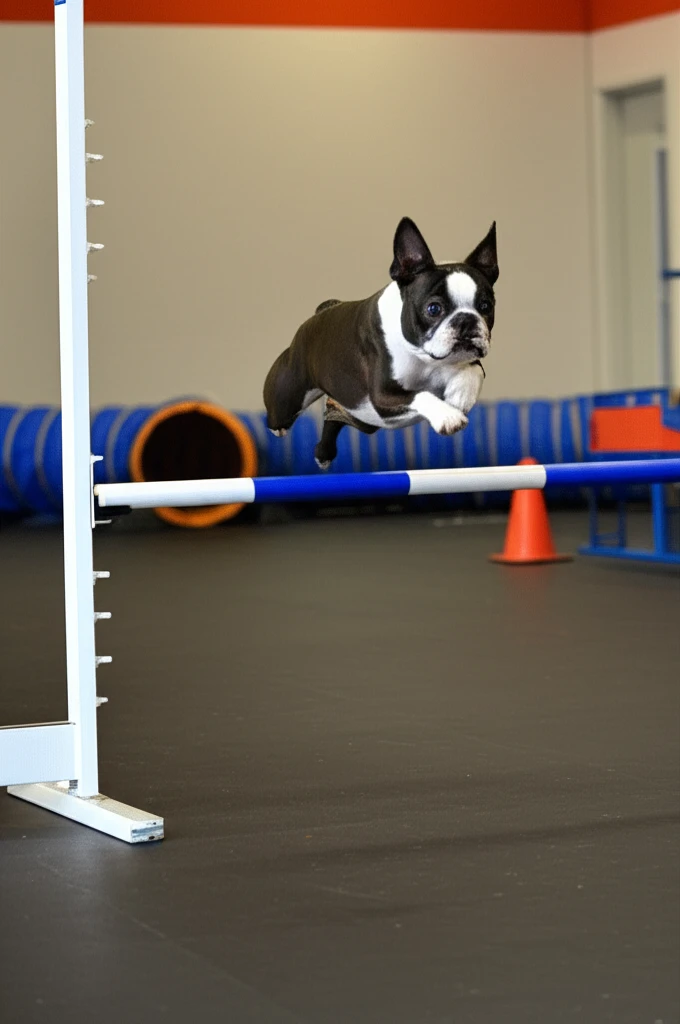
The Jumping Problem Starts Day One
Boston Terriers jump. A lot. On you, on your guests, on every person who makes the mistake of acknowledging their existence. At fifteen to twenty-five pounds, a jumping Boston isn't dangerous the way a jumping Labrador might be, and that's exactly why the behavior gets ignored until it's deeply ingrained. By the time it's annoying, it's already a habit with months of reinforcement behind it.
Bostons jump because they're excited, and they're excited almost all the time. Greetings, mealtimes, leash clips, doorbells — each one is a five-alarm celebration. The jumping is their way of getting closer to your face, and every time someone laughs, pushes them down, or even makes eye contact while they're airborne, the behavior gets stronger.
The fix is to make four feet on the floor more rewarding than going vertical. Teach a default sit for every greeting. Before you open the door, before you put the leash on, before you set the food bowl down — sit first. Reward the sit immediately and generously. When your Boston jumps, turn away completely. No eye contact, no talking, no touching. The moment all four feet hit the ground, turn back and reward. Our full guide on how to stop dog jumping breaks this protocol down step by step, and it works especially well with Bostons because they're motivated by social attention more than almost anything else.
Impulse Control: Teaching a Boston to Think Before Acting
Boston Terriers are reactive in the best possible way — they react to everything with enthusiasm. The doorbell is thrilling. A squirrel is electrifying. Another dog walking past is the best thing that has ever happened. That constant state of arousal makes it hard for your Boston to think before acting, and a dog who can't pause before responding is a dog who's difficult to live with.
Impulse control isn't about suppressing your Boston's personality. It's about teaching them that waiting produces better outcomes than lunging. Start with simple exercises: hold a treat in your closed fist and wait for your Boston to stop pawing at it. The moment they back off or sit, open the hand. Practice "wait" at doorways before walks. Ask for eye contact before tossing a toy. Each repetition teaches your Boston that self-control is the fastest path to what they want.
The real power of impulse control work shows up in everyday life. A Boston who understands the concept of waiting can handle a doorbell without launching themselves at the door. They can walk past another dog without dragging you across the street. They can greet a child without bowling them over. These aren't separate skills — they're all expressions of the same underlying ability to pause and make a choice. Build that ability early, and you'll prevent most of the behavioral complaints Boston owners bring to trainers later.
Heat Sensitivity and the Case for Indoor Training
Boston Terriers are brachycephalic — their shortened muzzle means less efficient breathing and significantly reduced ability to regulate body temperature. This isn't a minor detail. It directly affects when, where, and how long you can train your dog. A Boston working in warm weather overheats faster than most breeds, and an overheated dog can't learn, can't focus, and is at genuine medical risk.
This is one of the strongest arguments for training your Boston in a climate-controlled indoor facility. No canceled sessions because it's too hot outside. No cutting a class short because your dog is panting and disengaged after ten minutes. No seasonal gaps where training stalls for three months because summer arrived. Indoor training means your Boston works at full capacity year-round, in a consistent environment where the temperature supports focus rather than undermining it.
Even at home, schedule training for the coolest parts of the day during warmer months. Keep sessions short — Bostons do well with five to ten minutes of focused work followed by a rest period. Always have water available. If your Boston is panting heavily or seems sluggish during a session, stop immediately. Pushing through heat stress isn't dedication; it's dangerous for a brachycephalic breed.
Socialization: Your Boston's Greatest Strength
Here's the good news: Boston Terriers are among the most naturally social breeds. They genuinely enjoy meeting new people and dogs, and that sociability is a gift when it comes to training. A dog who likes other dogs is easier to work with in group settings. A dog who likes people is easier to manage in public. Your Boston already has the raw material — your job is to refine it.
Early socialization for a Boston isn't about overcoming wariness, the way it might be with a more reserved breed. It's about teaching appropriate social behavior. Your Boston needs to learn that enthusiastic doesn't mean uncontrolled. They need to understand that not every dog wants to play at their intensity level, and that greeting someone calmly is more effective than climbing them like a ladder.
Structured socialization programs are ideal for Bostons because they provide social exposure with guidance. Your Boston practices being around other dogs while learning to maintain composure. A trainer can redirect overexcitement in the moment, before it becomes a pattern. And your Boston gets to build genuine social skills — reading body language, respecting other dogs' space, modulating energy — rather than just practicing being chaotic in the presence of other dogs.
If your Boston is still a puppy, start socialization classes now. The socialization window closes faster than most owners expect, and a Boston who misses it may still be friendly but will lack the social polish that makes them a pleasure to take anywhere.
Building on What Makes Bostons Great
Boston Terriers want to be with you. They want to please you. They think training is a game, and they're right — that's exactly what good training should feel like. These qualities make Bostons exceptionally rewarding to train once you've addressed the excitability factor. A Boston with solid impulse control and basic manners is one of the most adaptable, enjoyable companion dogs you can own.
Because Bostons are people-oriented and moderately energetic, they're excellent candidates for activities that combine mental engagement with handler partnership. Trick training channels their enthusiasm into specific behaviors and gives them a constructive way to show off. Rally obedience lets them work alongside you through a course, which plays to their desire to be near their person. Even nose work can be a good fit, giving their brain a focused job.
The key to keeping a Boston engaged in training is variety. They're smart enough to get bored with repetition, so rotate activities and introduce new challenges regularly. A Boston who thinks every training session brings something new will stay enthusiastic indefinitely. A Boston who drills the same three cues every day will start finding their own entertainment — and you probably won't like what they choose.
Zoom Room's training programs offer the variety and structure that Bostons thrive on, in a climate-controlled indoor environment that's ideal for brachycephalic breeds. Find a Zoom Room near you and give your Boston the training that turns all that raw enthusiasm into a well-mannered partnership.
Frequently Asked Questions
Are Boston Terriers easy to train?
Boston Terriers are eager to please and quick to learn, which makes them more trainable than many breeds. The challenge isn't intelligence or willingness — it's excitability. A Boston who is too wound up to focus can't absorb what you're teaching. The most effective approach is short, upbeat training sessions with clear rewards, combined with impulse control work that teaches your Boston to settle before engaging. Once you manage the excitement factor, Bostons are responsive and enthusiastic training partners who genuinely enjoy the process.
How do I stop my Boston Terrier from jumping on people?
Teach an alternative greeting behavior and make it more rewarding than jumping. Ask your Boston to sit before every greeting, and reward the sit immediately with the attention they want. When your Boston jumps, turn away completely — no eye contact, no talking, no pushing them off. The moment all four feet are on the ground, re-engage. Every person your Boston greets needs to follow the same protocol. Inconsistency is the biggest reason jumping persists: if jumping works even occasionally, your Boston will keep trying it.
Can Boston Terriers handle outdoor exercise in summer?
Boston Terriers are brachycephalic, meaning their shortened muzzle makes them significantly less efficient at cooling themselves through panting. They overheat faster than most breeds and are at higher risk for heat-related illness. During warmer months, limit outdoor exercise to early morning or evening when temperatures are lower, keep sessions short, and always have water available. Indoor activities and climate-controlled training facilities are the safest option for keeping your Boston active during hot weather without risking their health.
Ready to Get Started?
Zoom Room's climate-controlled indoor gym is purpose-built for breeds like the Boston Terrier — cool, structured, and full of the variety that keeps your dog engaged. Find a location near you and put all that Boston enthusiasm to work.
Find a Zoom Room