
How to Train a Cavalier King Charles Spaniel
Cavalier King Charles Spaniels are one of the most people-oriented breeds you'll ever meet. That deep attachment to their humans is what makes them wonderful companions — and it's also the source of their biggest training challenge.
The Separation Anxiety Reality
Cavaliers were bred to be lap dogs for royalty. That's not a cute historical footnote — it's a breeding directive that produced a dog who is genuinely distressed when separated from their person. If your Cavalier panics when you leave the room, that's not a training failure. It's a breed tendency that needs proactive management from day one.
Separation anxiety in Cavaliers requires a gradual, systematic approach. Start with absences measured in seconds, not minutes. Step out of sight, return before your dog escalates, and reward calm behavior. Build duration slowly. The goal isn't to teach your Cavalier to be alone for eight hours overnight — it's to help them learn that your departure always means your return. Crate training, when introduced positively, gives many Cavaliers a secure space that reduces anxiety. Interactive puzzle toys during departures keep their brain occupied during those first critical minutes.
Training a Sensitive Dog
Cavaliers are emotionally soft. A sharp tone of voice that a Labrador might shake off can shut a Cavalier down completely. You'll know it's happened because your dog will disengage — turning away, lip-licking, or simply refusing to participate. This isn't a dog being dramatic. It's a dog whose nervous system is finely tuned to human emotion.
This sensitivity makes positive reinforcement not just the best approach, but the only viable one. Cavaliers are natural people-pleasers, which means they're incredibly responsive to praise, treats, and gentle encouragement. Your approval is a powerful motivator for this breed. Use a warm, upbeat tone during training. Keep your body language relaxed and open. When your Cavalier makes a mistake, simply redirect — no verbal correction needed. They'll read your shift in energy and adjust. This responsiveness to emotion also means your own frustration is contagious, so take a break if you're feeling impatient.
Socialization: Preventing Timidity Before It Starts
Cavaliers are naturally friendly, but without proper socialization they can tip toward timidity — especially around novel sounds, unfamiliar environments, and larger dogs. A timid Cavalier isn't in danger of becoming aggressive, but they will become a dog who trembles at the vet, cowers during thunderstorms, and avoids new experiences entirely. That's not a good life for any dog.
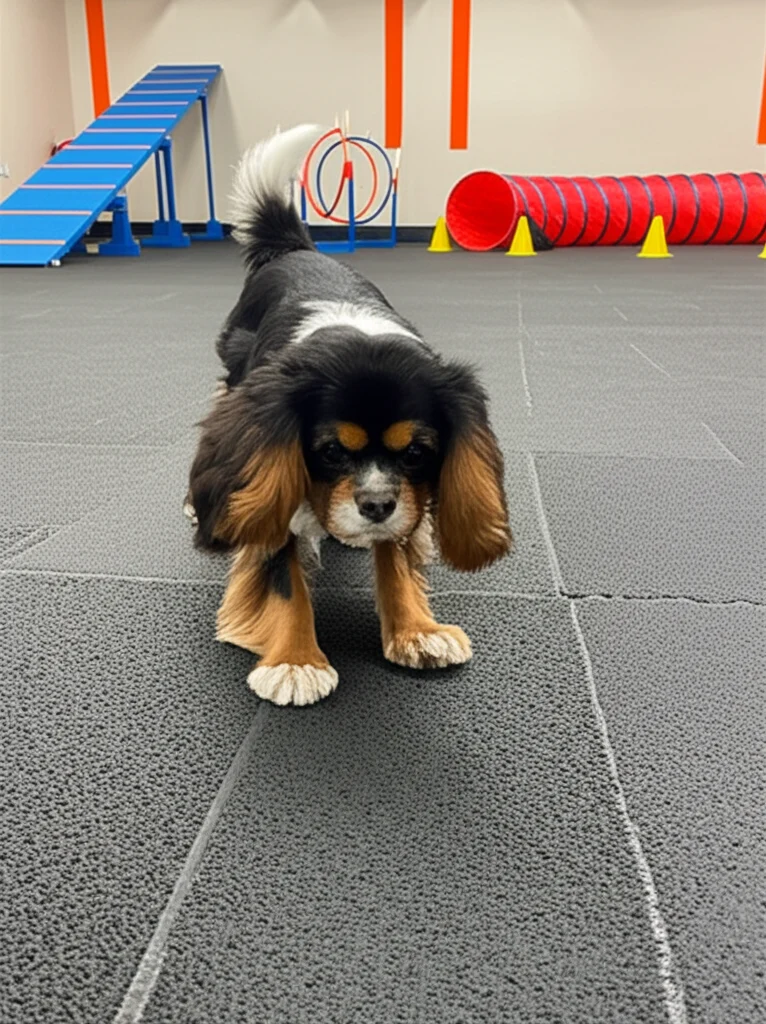
Early socialization for Cavaliers should emphasize gentle, positive exposure to a wide range of stimuli. Introduce different surfaces (metal grates, grass, tile), sounds (traffic, appliances, music), and people (children, men with hats, people using mobility aids) at a pace your Cavalier can handle. Watch their body language — a loose, wiggly body means they're comfortable; a tucked tail or whale eyes mean you've moved too fast. An indoor training environment is especially valuable for sound-sensitive Cavaliers because it provides controlled exposure without the unpredictable chaos of outdoor settings.
Therapy Dog Potential
Cavaliers are natural therapy dog candidates, and it's not just because they're cute. Their calm temperament, love of human contact, and small size make them ideal for visiting hospitals, nursing homes, and schools. If you've ever thought about therapy dog work, a Cavalier is one of the best breeds to pursue it with.
Therapy dog preparation builds on the same foundation as all good training: socialization, basic obedience, and confidence in varied environments. Your Cavalier needs to be comfortable being handled by strangers, calm around medical equipment, and reliable in unpredictable settings. A Canine Good Citizen certification is typically the first step. Zoom Room offers both CGC prep classes and therapy dog training programs that are well-suited to Cavaliers. The structured group class setting gives your Cavalier practice being calm and focused around other dogs and people — exactly the skills therapy work demands.
Everyday Training That Fits the Breed
Cavaliers don't need the intense mental stimulation that a Border Collie requires, but they do need consistent, engaging training to stay well-mannered. Focus on reliable recall (Cavaliers can develop selective hearing when they catch a scent), polite greetings (they love everyone and will try to climb into every lap), and solid recall in distracting environments.
Group obedience classes work beautifully for this breed. Cavaliers are social dogs who enjoy the presence of other dogs and people, and the group setting provides ongoing socialization while you work on skills. Keep training sessions positive and relatively brief — fifteen to twenty minutes is plenty. End every session on a high note with something your dog does well. Find your nearest Zoom Room to explore group classes that match your Cavalier's temperament and your training goals.
Frequently Asked Questions
Are Cavalier King Charles Spaniels easy to train?
Cavaliers are eager to please and highly responsive to positive reinforcement, which makes them receptive learners. They pick up cues quickly when training is gentle and reward-based. The main challenge isn't learning ability — it's their sensitivity. Harsh corrections or an impatient tone will cause a Cavalier to shut down and disengage. Keep sessions upbeat and encouraging, and you'll find that Cavaliers are enthusiastic training partners who genuinely enjoy working with their owners.
How do I help my Cavalier with separation anxiety?
Start prevention early by teaching your Cavalier that being alone is safe, not scary. Practice very short departures — literally seconds at first — and return before your dog becomes distressed. Gradually increase the duration over weeks, not days. Provide a high-value chew or puzzle toy that only appears when you leave. Avoid making departures and returns emotional events. If your Cavalier already shows significant anxiety, work with a professional trainer who can create a structured desensitization plan tailored to your dog's specific triggers.
Do Cavalier King Charles Spaniels need socialization?
Yes, and more than many owners expect. Cavaliers are naturally friendly, but without structured socialization they can become timid and sound-sensitive. The critical socialization window closes around sixteen weeks, so early exposure to different people, dogs, sounds, and environments is essential. Focus on quality over quantity — one positive experience with a calm, friendly dog is worth more than ten chaotic encounters at a dog park. Group classes in a controlled environment are one of the most effective ways to socialize a Cavalier.
Ready to Get Started?
Zoom Room's gentle, positive approach to training is ideal for sensitive breeds like Cavalier King Charles Spaniels. Find a location near you and see our class schedule.
Find a Zoom Room