
Cavalier King Charles Spaniel Separation Anxiety: Why It Happens and What to Do
You cannot go to the bathroom without a Cavalier shadow following you. You cannot pick up your keys without triggering a meltdown. You cannot leave the house without your dog howling, panting, or destroying something near the door. This is not clinginess. This is a companion breed experiencing genuine distress when their person disappears.
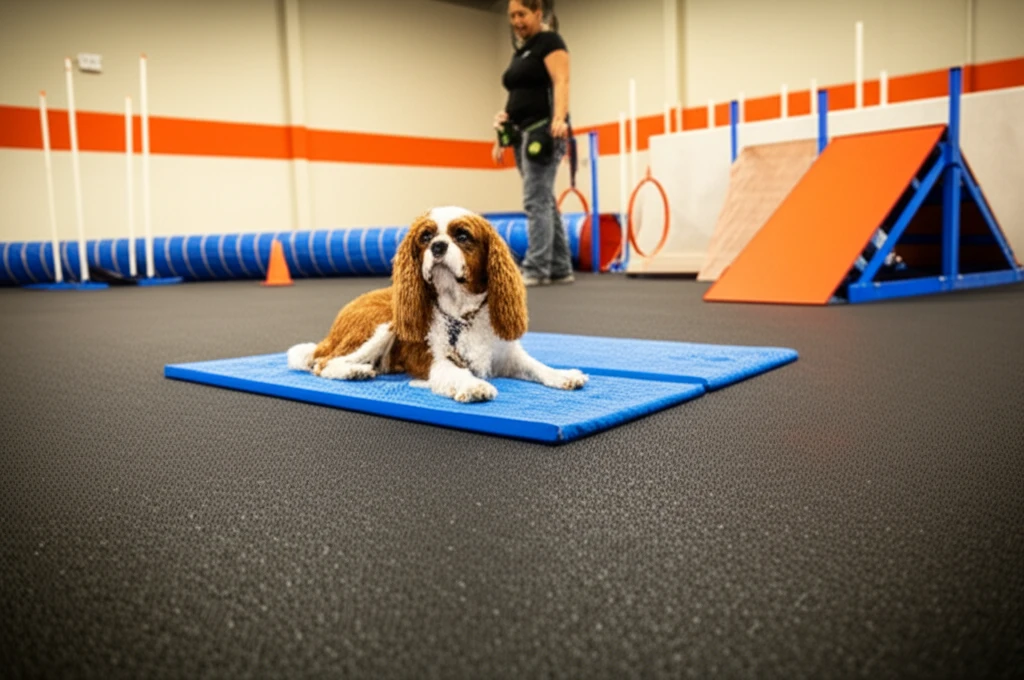
Why Separation Anxiety Shows Up Differently in Cavaliers
Cavalier King Charles Spaniels were specifically bred to be companion dogs. Not hunting companions. Not working partners. Lap dogs. For centuries, the breed's entire purpose was to be physically close to their person at all times. That is not a behavioral quirk you can train away — it is the breed's core identity.
This means that separation anxiety in Cavaliers is not an occasional problem that affects some dogs. It is a breed-wide predisposition that affects the majority of Cavaliers to some degree. The dog who follows you room to room, who panics when you step outside to get the mail, who whines the moment you pick up your bag — that dog is expressing exactly the attachment they were designed to form.
Understanding this matters because the training approach is different. With many breeds, separation anxiety develops from a negative experience or from being left too long too soon. With Cavaliers, the predisposition exists before anything goes wrong. Your training plan needs to build independence that the breed does not naturally possess, and it needs to do so gently, because Cavaliers are also one of the most emotionally sensitive breeds. Harsh methods or rushing the process will make things worse, not better.
What Works for Cavaliers Specifically
Start with micro-absences. Do not begin by leaving your Cavalier alone for an hour. Begin by stepping behind a baby gate for five seconds while your dog can still see you. Then ten seconds. Then with the door partially closed. Then fully closed for five seconds. This sounds absurdly slow, and it is — because with Cavaliers, absurdly slow is the speed that works. Rushing past your dog's comfort zone creates setbacks that can take weeks to recover from.
Decouple your departure cues. Your Cavalier has memorized your leaving routine: shoes, keys, coat, bag, that specific breath you take before walking out. Practice those cues without actually leaving. Pick up your keys and sit on the couch. Put on your shoes and make lunch. Grab your bag and then put it down. When those cues stop reliably predicting your departure, they stop triggering the anxiety cascade.
Build independent confidence. Cavaliers who have their own activities — a stuffed Kong, a snuffle mat, a puzzle feeder — can learn that being alone comes with good things. Pair every departure with a high-value food enrichment that your dog only gets when you leave. Over time, your keys jingling becomes the signal for something wonderful rather than something terrifying.
Crate training done right. A properly introduced crate can give your Cavalier a safe den space that provides security during absences. But crate training must be a gradual, positive process. A Cavalier who is shut in a crate without preparation will panic, and the crate becomes associated with abandonment rather than safety. Take weeks, not days, to build positive crate associations before using it for alone time.
The Socialization Connection
Socialization might seem unrelated to separation anxiety, but for Cavaliers, it addresses a critical root cause: the belief that you are the only source of safety in the world. A Cavalier who has positive experiences with other people and other dogs in varied environments develops a broader sense of security. The world becomes less threatening, and your absence becomes less catastrophic.
Group training classes are particularly valuable because they give your Cavalier positive experiences away from home, in the presence of strangers and other dogs, while you are still there. This builds confidence in new environments. Over time, a Cavalier who is comfortable in multiple settings with multiple people is a Cavalier who can handle your absence more easily, because they have evidence that good things happen even when the environment is not their living room.
For Cavaliers with more severe separation anxiety, consider pairing socialization work with consultation from your veterinarian. Some Cavaliers benefit from short-term anti-anxiety medication to bring their baseline stress level down enough for the training to gain traction. Medication is not a failure — it is a tool that helps the training work. A veterinary behaviorist can help determine whether your Cavalier's anxiety level warrants pharmacological support alongside your training plan.
At Zoom Room, our gentle group classes give your Cavalier the confidence-building socialization they need in a controlled, supportive environment. Find a Zoom Room near you and start building your Cavalier's independence one small step at a time.
Frequently Asked Questions
Should I get a second dog to help my Cavalier's separation anxiety?
Sometimes, but do not count on it. Some Cavaliers are comforted by having another dog present during absences, but many are specifically attached to their person, not just to having company. A second dog does not replace you. If the anxiety is person-specific, adding a second dog gives you two dogs to manage and one of them is still anxious. Address the separation anxiety through training first. If your Cavalier's anxiety improves with a dog-sitter or at daycare, that suggests they may benefit from a companion. But get the training foundation in place before adding a second dog to the equation.
My Cavalier only has separation anxiety with me, not with my partner. Why?
Cavaliers often form a primary attachment to one person, and the separation anxiety is linked to that specific bond rather than to being alone in general. Your dog is fine with your partner because your partner is not the primary attachment figure. This actually gives you a useful training tool: your partner can practice short separations from you while staying with the dog, gradually building your Cavalier's tolerance for your specific absence. It also confirms that the issue is attachment-based rather than a generalized anxiety disorder, which is useful information for your training plan.
Ready to Build Your Cavalier's Confidence?
Zoom Room's gentle group classes help Cavalier King Charles Spaniels build independence and social confidence in a supportive, low-pressure environment.
Find a Zoom Room