
How to Train a Cocker Spaniel
Cocker Spaniels are soft dogs with strong opinions about their food bowl. That combination of sensitivity and resource guarding potential is the central training challenge of the breed, and how you handle it early determines what kind of dog you live with for the next fourteen years.
Understanding Resource Guarding in Cocker Spaniels
Cocker Spaniels are more prone to resource guarding than many breeds, particularly around food. Resource guarding means a dog who stiffens, growls, snaps, or escalates when someone approaches their food bowl, a chew, a toy, or even a favored resting spot. If you have noticed your Cocker freezing over their dinner when you walk past, that is not a dog being "rude." That is a dog communicating discomfort, and it deserves a thoughtful response, not a forceful one.
The outdated advice to stick your hand in your dog's bowl or take food away to "teach them who's boss" makes resource guarding worse, not better. Instead, build a positive association with your approach. Walk past the bowl and drop something better in, like a piece of chicken. Approach and add, never approach and take. Over time, your Cocker learns that humans near their food means the situation is about to get better, not worse.
If guarding behavior is already established, work with a trainer who understands positive reinforcement approaches to this specific issue. Resource guarding responds very well to systematic counter-conditioning, but it requires a plan, not improvisation.
Training a Sensitive Dog
Cocker Spaniels are among the most emotionally sensitive breeds. This is a feature of their sporting heritage: a flushing spaniel needs to be deeply attuned to its handler to work effectively in the field. That same sensitivity means a Cocker who hears a raised voice, feels tension on the leash, or senses your frustration will shut down. Not eventually. Immediately.
This sensitivity makes positive reinforcement not just the best approach but the only viable one. Cocker Spaniels who are trained with corrections or harsh tones often develop fear-based behaviors that are much harder to undo than whatever you were trying to fix in the first place. The good news is that the same sensitivity that makes them fragile also makes them extraordinarily responsive to praise, treats, and your genuine enthusiasm.
Keep your training voice warm and your body language relaxed. If a session is going sideways, smile, ask for an easy cue your Cocker knows well, reward it, and end there. Five good minutes is worth more than twenty frustrated ones. Clicker training works beautifully with Cockers because the marker is neutral and consistent, removing any emotional variability from your feedback.
Socialization: Preventing Fearfulness
Under-socialized Cocker Spaniels tend toward fearfulness rather than aggression. A Cocker who has not had enough positive exposure to the world may become a dog who trembles at new environments, shies away from unfamiliar people, or reacts with alarm to everyday sounds. That soft temperament that makes them so responsive to training also makes them vulnerable to negative experiences leaving lasting impressions.
Early socialization should be extensive and carefully managed. Expose your Cocker puppy to different surfaces, sounds, people of varying appearances, and other dogs, all while keeping the experiences positive. The key word is positive. A single overwhelming experience, like being charged by an off-leash dog at a park, can set a sensitive Cocker's social development back significantly.
Group training classes in a controlled indoor environment are ideal for Cocker socialization because the variables are managed. Your Cocker practices being around other dogs and people in a setting where the trainer controls the intensity and nothing unexpected comes barreling around a corner. If your Cocker is already showing signs of leash reactivity or social nervousness, start with a class size and environment where they can succeed, then build gradually.
Managing the Mouthy Puppy Phase
Cocker Spaniel puppies are mouthy. They were bred to carry game birds in their mouths, and that oral fixation shows up early as nipping, chewing, and putting their mouths on everything, including your hands, your clothes, and your furniture. This is not aggression. It is a sporting instinct with nowhere productive to go.
Redirect rather than suppress. Keep appropriate chew items readily available and swap them in whenever your Cocker puppy's teeth find something they should not have. When your puppy mouths your hand, calmly remove your hand and redirect to a toy. If the mouthing is intense, a brief pause in play, where you turn away for a few seconds, teaches your puppy that teeth on skin ends the fun. Consistency across all household members matters. If one person allows mouthing during play and another does not, the puppy gets mixed signals.
Structured activities channel that oral drive productively. Retrieving games, indoor gym activities, and food puzzles that require manipulation all give your Cocker's mouth a job. A puppy with appropriate outlets for their breed drives is easier to live with than one who is constantly being told "no" without alternatives.
Building on the Cocker Spaniel's Strengths
Cocker Spaniels genuinely want to work with you. That eager-to-please orientation is the foundation of everything good about training this breed. Once your Cocker understands what earns reinforcement, they will offer it reliably and enthusiastically. They are quick learners who retain cues well and enjoy the process of training itself.
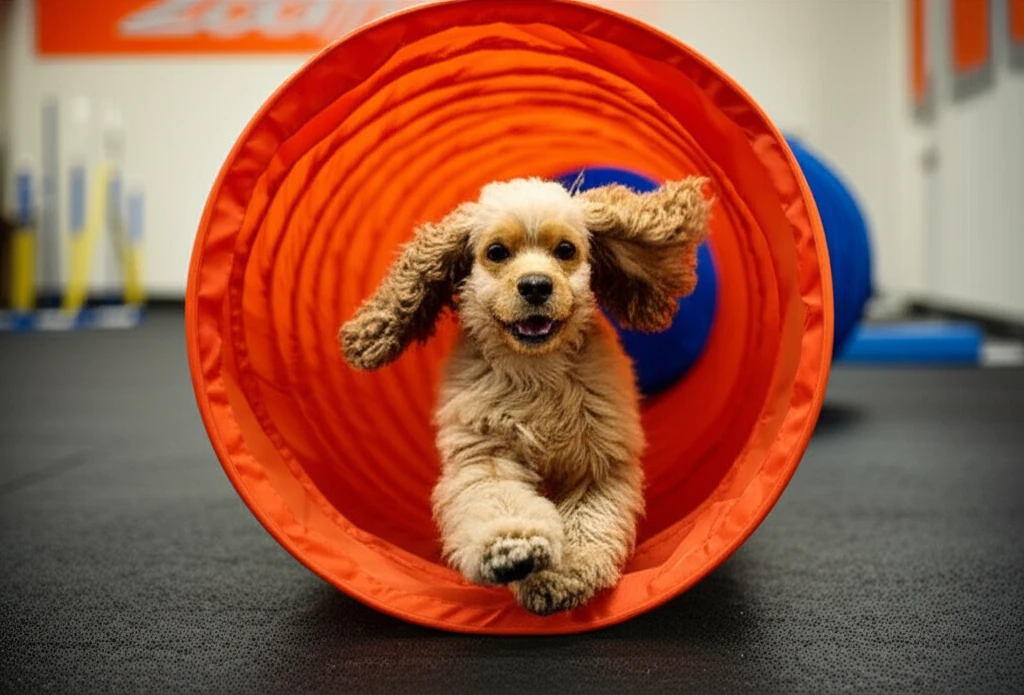
Use that eagerness strategically. Cocker Spaniels are excellent candidates for Canine Good Citizen certification, therapy dog work, and activities that leverage their attentive, gentle nature. Many Cockers also take well to agility, where their athleticism and handler focus combine effectively.
Structured training also provides the mental stimulation that keeps sporting breeds balanced. A Cocker with nothing to do will find something, and it usually involves something you did not want chewed, dug up, or barked at. Regular training sessions, even brief daily ones, satisfy the working drive that is still very much present in this breed despite their reputation as couch companions.
Find a Zoom Room near you to start training with a breed that will reward your investment with genuine partnership. The Cocker Spaniel who gets thoughtful, consistent training becomes one of the most rewarding dogs to live with.
Frequently Asked Questions
How do I stop my Cocker Spaniel from resource guarding?
Build a positive association with your approach rather than confronting the guarding behavior directly. Walk past your Cocker's food bowl and toss something high-value nearby. Approach and add, never approach and take away. Over repeated sessions, your dog learns that someone coming near their food predicts better things arriving, which changes the underlying emotional response. Avoid reaching into the bowl, standing over your dog while they eat, or taking things from their mouth to prove a point. If guarding is already intense, including growling, snapping, or biting, work with a professional trainer who uses positive reinforcement methods to address the issue safely.
Are Cocker Spaniels easy to train?
Cocker Spaniels are highly trainable when you match your approach to their temperament. They are eager to please and learn quickly with positive reinforcement. The critical factor is their sensitivity. Cockers respond poorly to raised voices, leash corrections, or tense training sessions. If you keep things positive, warm, and reward-based, you will have a responsive and enthusiastic training partner. If frustration enters the picture, your Cocker will likely shut down and become reluctant to engage. Short, upbeat sessions with clear rewards produce the best results with this breed.
Why does my Cocker Spaniel puppy bite so much?
Cocker Spaniel puppies are naturally mouthy because they were bred to carry things in their mouths. The nipping, chewing, and mouthing you are experiencing is not aggression. It is a sporting breed instinct that needs redirection, not punishment. Keep appropriate chew toys always available and redirect whenever teeth hit skin or clothing. Brief play pauses, where you turn away and withdraw attention, teach your puppy that mouthing ends the interaction. Be consistent across all family members. Most Cocker puppies grow out of the intense mouthing phase by seven to eight months, faster when appropriate outlets and consistent redirection are in place.
Ready to Get Started?
Zoom Room's positive reinforcement classes are perfectly suited for sensitive breeds like the Cocker Spaniel. You train alongside your dog in a clean, indoor gym where every session builds confidence and strengthens your partnership.
Find a Zoom Room