
How to Train a Great Dane
Your Great Dane puppy is adorable right now. In about six months, that puppy will weigh more than most adults. Every behavior you think is cute at 20 pounds becomes a serious problem at 150 — and the window to teach manners is shorter than you think.
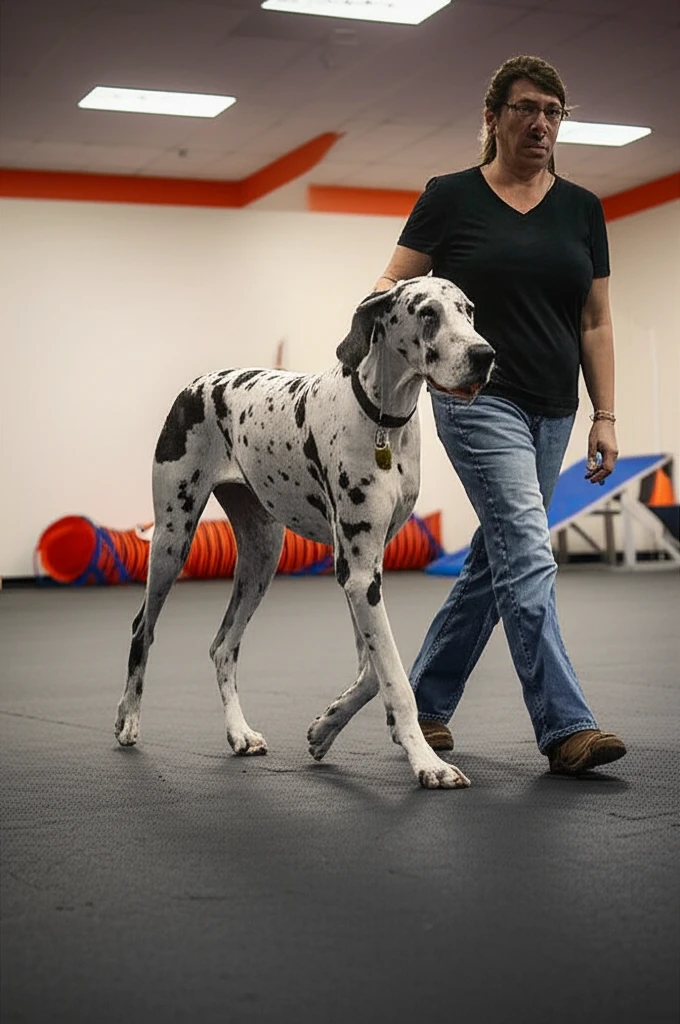
The Clock Is Ticking on Good Manners
Great Danes grow at a staggering rate. Your puppy can gain ten or more pounds per month during the first year. That means the window between "small enough to manage" and "strong enough to pull you off your feet" closes fast. A ten-week-old Dane jumping on guests gets laughs. A year-old Dane doing the same thing knocks people down, frightens children, and becomes a genuine safety concern.
This isn't about your dog being bad. Great Danes are affectionate, people-oriented dogs who jump because they want to be close to your face. The impulse is sweet. The physics are the problem. You need to teach an incompatible behavior — like sitting for greetings — while your Dane is still small enough that you can manage the training mechanics. Every week you wait makes this harder, because the behavior is self-reinforcing: your dog jumps, they get attention (even if it's you pushing them away), and the behavior strengthens.
Jumping prevention should be your number one training priority from the first day your Dane puppy comes home. Teach a default sit for greetings. Reward four feet on the floor. Ask every person who interacts with your puppy to turn away and ignore them if they jump, and only give attention when all four paws are down. This is non-negotiable for giant breeds — it's not a preference, it's a safety requirement.
Leash Walking When Your Dog Outweighs You
Walking a Great Dane is a fundamentally different physical experience from walking most other breeds. A Labrador pulling on the leash is annoying. A Great Dane pulling on the leash can dislocate your shoulder. The leverage a 150-pound dog generates is something you have to plan for, not react to after the fact.
Loose leash walking training needs to start when your Dane is a puppy and continue consistently through adolescence. Use a front-clip harness rather than a flat collar — it redirects forward motion into a turn, which mechanically reduces pulling without any discomfort. A flat collar on a pulling Dane puts enormous pressure on the throat and trachea, which is both ineffective and physically harmful to the dog.
The training approach for a giant breed is the same as any dog — reward your Dane for being at your side, stop moving when the leash goes tight, change direction frequently — but the consistency requirement is higher because the consequences of failure are bigger. A 30-pound puppy who sometimes pulls is a manageable work in progress. A 130-pound adolescent who sometimes pulls is a dog who can't be walked safely by most people. Put in the work now, and you'll have a dog who is a pleasure to walk anywhere for the next eight to ten years.
The Shy Great Dane Problem
People assume all Great Danes are confident because they're enormous. In reality, shyness is one of the most common behavioral challenges in the breed. A Great Dane who hasn't been properly socialized can become fearful of unfamiliar people, nervous in new environments, and reactive on leash — and a fearful dog that weighs 150 pounds is a much bigger challenge to help than a fearful dog that weighs 15 pounds.
Early, consistent socialization is the single most important investment you can make in your Great Dane's future. During the critical socialization window — roughly 3 to 16 weeks — your puppy should be exposed to a wide variety of people, surfaces, sounds, and environments in positive, low-pressure ways. Let your Dane observe from a distance before approaching. Reward calm, curious behavior. Never force your puppy into an interaction that makes them uncomfortable, because a single overwhelming experience during this window can create a lasting fear response.
If your Great Dane is already showing signs of fearfulness or avoidance, the approach shifts to slow, systematic desensitization. Work at your dog's pace, not yours. Create positive associations with the things that worry them using high-value treats and distance. A structured group class in an indoor facility provides controlled exposure to other dogs and people without the chaos of a dog park — which is exactly the kind of predictable environment that helps a shy Dane build real confidence.
Training a Giant Breed: What Looks Different
Positive reinforcement works the same way with a Great Dane as it does with any other breed — the principles don't change. But some of the practical mechanics do. You're training a dog whose head is at your waist (and eventually at your chest), so treat delivery, body positioning, and physical handling all need adjustment.
For treat delivery, hold treats at your hip rather than reaching up to your dog's mouth — you want your Dane to orient downward toward you, which naturally encourages calmer body posture. Use a hand target (teaching your dog to touch their nose to your palm) as a positioning tool. A hand target lets you guide a giant dog into position without pulling, pushing, or physically manipulating a body that's too large to maneuver by force.
Practice body handling early and often. Your Great Dane will need veterinary exams, nail trims, and grooming throughout their life. A cooperative Dane who is comfortable being touched everywhere is dramatically easier to care for than a 150-pound dog who panics at the vet. Teach your puppy to accept having their paws held, ears examined, and mouth opened by pairing every touch with a treat. This investment in early handling pays off for your dog's entire life.
Great Danes mature more slowly than smaller breeds, both physically and mentally. Expect puppyish behavior well past a year old. Be patient with the process, stay consistent with the rules, and remember that your Dane isn't being stubborn — they're still developing. Training a giant breed is a marathon, not a sprint, and the dogs who turn out best are the ones whose owners stayed steady through the awkward adolescent phase.
Building a Life With a Gentle Giant
Well-trained Great Danes are among the most pleasant dogs to live with. They're calm indoors, devoted to their families, and surprisingly gentle despite their size. Getting there requires front-loading the work: establishing manners while your dog is young, socializing consistently, and maintaining structure through adolescence.
Great Danes don't need the intense physical exercise that herding or sporting breeds demand, but they do need daily movement and mental engagement. Short training sessions, puzzle feeders, nose work, and moderate walks keep a Dane's brain and body satisfied without the joint stress that comes from high-impact activity during growth. Protect those growing joints — no sustained running, jumping from heights, or extended stair climbing until your vet confirms the growth plates have closed.
At Zoom Room, our training programs are designed to work with every size of dog. Group classes give your Great Dane the socialization they need while teaching you the handling skills that make life with a giant breed manageable and enjoyable. Find a Zoom Room near you and start building the foundation your Dane needs — before they outgrow your ability to wing it.
Frequently Asked Questions
Are Great Danes easy to train?
Great Danes are generally eager to please and respond well to positive reinforcement, which makes them receptive to training. The challenge isn't their willingness — it's the timeline. Because they grow so quickly, you have a shorter window to establish good manners before physical size makes unwanted behaviors dangerous. A jumping Dane or a pulling Dane creates problems that a jumping Beagle simply doesn't. Start early, stay consistent, and prioritize the basics — loose leash walking, sitting for greetings, and calm behavior around people — from day one.
How do I stop my Great Dane from jumping on people?
Teach an incompatible behavior. Your Dane can't jump and sit at the same time, so make sitting the default for all greetings. Every person who interacts with your dog needs to follow the same rule: turn away and ignore jumping, give attention only when all four paws are on the floor. Use high-value treats to reward sitting and calm greetings. Start this protocol the day your puppy comes home and enforce it every single time. Inconsistency is the biggest enemy here — if jumping sometimes works, your Dane will keep trying it.
How much exercise does a Great Dane need?
Adult Great Danes need moderate daily exercise — a couple of walks plus some play or training time. They're not high-energy endurance athletes. What matters more than quantity is protecting their joints during growth. Puppies and adolescents should avoid high-impact activities like sustained running, jumping from heights, or long stair climbing until growth plates close, which can take up to two years. Focus on low-impact movement, mental enrichment, and short training sessions. A tired Dane brain is more valuable than tired Dane legs.
Ready to Get Started?
Zoom Room's indoor training facility is built for dogs of every size — including the biggest ones. Find a location near you and get your Great Dane's training started before the puppy phase is over.
Find a Zoom Room