
How to Train a Pembroke Welsh Corgi
Your Corgi is herding your children, nipping at your guests' heels, and barking directions at everyone in the household. None of this is bad behavior. It is a herding dog doing herding work in a living room, and your job is to give that drive somewhere better to go.
Why Your Corgi Nips at Heels
Pembroke Welsh Corgis were developed to move cattle by nipping at their heels and dodging kicks. That is not a footnote in a breed history book. It is the operating system running in your Corgi's brain every day. When your Corgi chases and nips at running children, circles your guests' ankles, or tries to physically direct the family cat, they are applying sophisticated herding behavior to an environment that has no livestock.
The nipping is not aggression, and treating it like aggression makes it worse. Punishing a herding instinct does not remove it. It adds stress to a behavior that is already happening under arousal, which typically produces a dog who nips harder or redirects the behavior to something less obvious.
Instead, interrupt and redirect. When your Corgi starts to herd, ask for an incompatible behavior: a sit, a down, or a "go to your mat" cue. Reward the redirection heavily. Simultaneously, give the herding drive a legitimate outlet. Urban herding classes, where your Corgi learns to push a large ball on cue, channel the instinct productively. Positive reinforcement training gives you the tools to reshape the behavior without creating conflict.
Training a Dog Who Is Smarter Than the Average Assignment
Corgis are genuinely intelligent, and that intelligence is not always convenient. A Corgi who figures out that barking at the dinner table eventually produces a dropped scrap, or that pawing at the back door gets it opened faster than waiting, has not been badly trained. They have trained you. Corgis are pattern-recognition experts who learn contingencies quickly, including the ones you did not intend to teach.
The antidote is being deliberate about what you reinforce. Every interaction with your Corgi is training, whether you planned it that way or not. If your Corgi demands attention by barking and you eventually give in, even once, you have reinforced that strategy. Corgis learn from inconsistency faster than most breeds, and they will exploit every crack in the system.
On the positive side, that same intelligence makes Corgis exceptionally responsive to structured training. They learn new cues quickly, enjoy complex exercises, and thrive when given problems to solve. Clicker training is particularly effective because it satisfies the Corgi need for precision. They want to know exactly what earned the reward, and a well-timed marker gives them that information clearly. Keep sessions challenging and varied. A bored Corgi will find something else to do with that brain, and you will not enjoy the results.
Socialization: Managing the Territorial Streak
Corgis are watchful, vocal, and territorial. These are useful traits in a farm dog who needs to alert when something enters the property and manage the movement of livestock. In a neighborhood or apartment, those same traits produce a dog who barks at every passerby, reacts to dogs on the other side of the street, and has strong opinions about who belongs in their space.
Early and ongoing socialization is critical for this breed. The goal is not to eliminate the Corgi's natural alertness but to expand their threshold so that routine events, such as strangers walking past the house, dogs on the sidewalk, and guests at the door, do not trigger a full alarm response.
Controlled exposure in an indoor training environment works well for Corgis because you can manage the intensity. Your Corgi practices being around unfamiliar dogs and people at a distance they can handle, with rewards for calm behavior. Gradually, the range of what registers as "normal" expands. If excessive barking at environmental triggers is already established, pair desensitization with a solid "enough" cue so your Corgi learns to alert and then settle.
Exercise and the Surprisingly Athletic Corgi
Do not let the short legs fool you. Corgis are athletes. They were built low to the ground to dodge cattle kicks, not because they are sedentary. A Corgi who does not get enough physical and mental exercise will find creative, destructive outlets for that energy, and their intelligence means the creativity can be impressive.
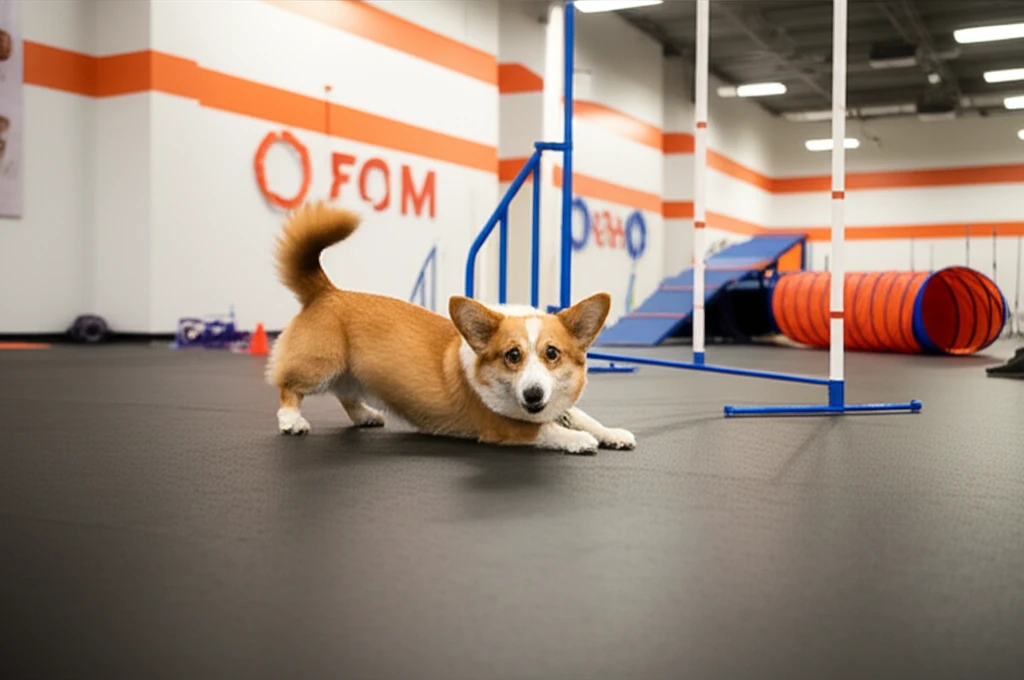
Agility is almost tailor-made for this breed. Corgis are fast, agile, and quick to learn course patterns. The combination of physical challenge and handler teamwork satisfies both their exercise needs and their working drive. Many Corgi owners are surprised at how competitive their short-legged dog is on an agility course.
Structured training classes also serve as exercise for the Corgi brain, which is just as important as physical activity. A thirty-minute training session that requires focus, problem-solving, and impulse control will tire your Corgi out more thoroughly than an hour of running in the yard. Combine physical activity with mental work, and you get a calmer, more settled dog at home.
Living with the Corgi Personality
Corgis have a presence that far exceeds their physical size. They are vocal, opinionated, and engaged with everything happening around them. This makes them entertaining to live with and occasionally exhausting. The key is channeling that engagement into structure rather than trying to suppress it.
Teach your Corgi a "place" or "mat" cue early and use it throughout daily life. Settle on a mat while you cook. Go to your place when guests arrive. This gives your Corgi a job during high-excitement moments and prevents them from defaulting to herding behavior when they do not know what else to do with themselves.
If you have a multi-pet household, manage your Corgi's herding instinct proactively. Introducing a new dog to a Corgi requires structure, because your Corgi will immediately try to manage the new arrival. Supervise interactions, reward calm behavior, and provide each dog with their own space. Many Corgis live happily with other dogs and cats once clear boundaries are established.
The Corgi who gets consistent training, adequate exercise, and outlets for their herding drive is a remarkably rewarding companion. They are loyal, smart, and genuinely fun to work with. Find a Zoom Room near you to start channeling that Corgi energy into something productive.
Frequently Asked Questions
How do I stop my Corgi from nipping at heels?
Redirect rather than punish, because the nipping is herding instinct, not aggression. When your Corgi starts nipping at heels, interrupt with a verbal cue and immediately redirect to an incompatible behavior like a sit or a mat settle. Reward the redirection generously. Manage the environment by preventing your Corgi from practicing the behavior: leash them when guests arrive, use baby gates during high-energy play, and teach children to stop running when nipping starts since running triggers the chase instinct. Provide a legitimate outlet for the herding drive through urban herding classes or structured games where chasing and controlling a ball is rewarded.
Are Pembroke Welsh Corgis easy to train?
Corgis are quick learners who pick up new cues fast, which makes them easy to train in the mechanical sense. The challenge is that they are equally quick at learning things you did not intend to teach. A Corgi will figure out that barking gets attention, that persistence opens doors, and that certain behaviors produce specific results from different family members. Successful Corgi training requires consistency from everyone in the household and an awareness that every interaction is a learning opportunity. Keep training sessions engaging and varied, because a Corgi who is bored with the curriculum will start improvising.
Do Corgis bark a lot?
Yes, Corgis are a vocal breed. They were developed as farm dogs who needed to alert to intruders and use their voice to move livestock. In a home setting, this translates to barking at the doorbell, passersby, unusual sounds, and sometimes things only they can detect. You will not eliminate the barking entirely, and trying to do so works against the breed's wiring. Instead, teach a solid acknowledgment and settle sequence: your Corgi alerts, you acknowledge it with a calm cue, and they are rewarded for stopping. Combine this with adequate mental stimulation, since a mentally engaged Corgi has less bandwidth for recreational barking.
Ready to Get Started?
Zoom Room's group classes, agility courses, and urban herding programs are built for breeds like the Corgi who need their brain and body engaged. Train alongside your dog in a clean, indoor gym with a professional trainer.
Find a Zoom Room