
How to Train a Siberian Husky
If your Husky treats every walk like the Iditarod, that is not disobedience. That is genetics. Huskies were bred to run long distances away from their handler, make independent decisions in dangerous conditions, and never quit. Training one means working with that wiring, not against it.
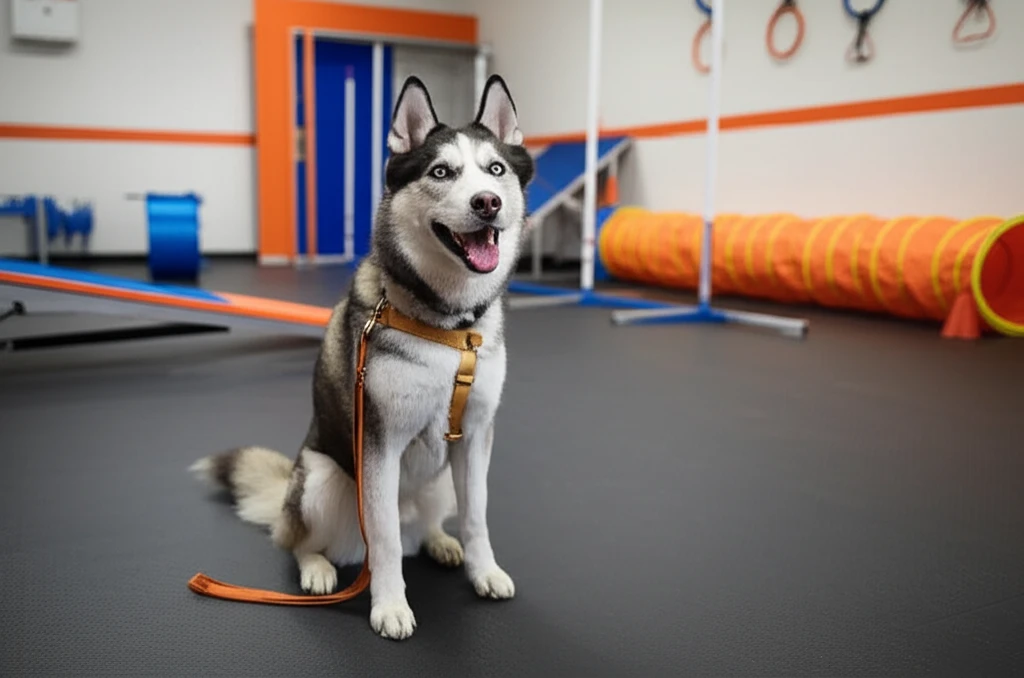
Why Your Husky Does Not Listen (And Why That Is Normal)
Most dog breeds were developed to work closely with a human handler, checking in for direction. Siberian Huskies were developed to do the opposite. A sled dog team runs ahead of the musher, often over terrain the human cannot even see clearly. The lead dogs make real-time decisions about safe footing, route changes, and pace. Breeding for that kind of independent judgment over hundreds of generations produces a dog who is fully capable of learning your cues and fully capable of deciding they have a better idea.
This does not mean Huskies are untrainable. It means the standard obedience approach, where you give a cue and the dog complies because you asked, needs adjustment. With a Husky, you are always making a case for why your suggestion is the most rewarding option available. Positive reinforcement is not just the ethical choice with this breed. It is the only approach that has any traction, because a Husky who feels pressured will simply disengage.
The Recall Problem
Recall is the single biggest training challenge with Siberian Huskies, and the stakes are high. A Husky with poor recall and an open gate is a dog who can cover miles before you finish saying "come." They are extraordinary escape artists who will dig under fences, jump over barriers, and find gaps in containment that would not occur to most other breeds. This is not mischief. It is a working drive looking for an outlet.
Building reliable recall with a Husky is a long-term project, and honesty matters here: most Husky owners will never achieve the kind of off-leash recall you might see with a Labrador Retriever or Golden Retriever. That is not a failure. It is breed-appropriate expectations. What you can build is a strong recall in controlled environments and a very strong emergency recall for critical moments.
Start in low-distraction settings with extremely high-value rewards. Practice recall as a game, not a cue that ends freedom. Every time your Husky comes back to you, it should be the best thing that happens to them in that moment. Never call your Husky to you for something they find unpleasant, like ending a play session or going in a crate. Protect the value of the recall cue at all costs.
Impulse Control: The Real Training Priority
Huskies are social dogs who generally enjoy meeting other dogs and people. Socialization in the traditional sense is rarely the problem. Impulse control is. Your Husky may love other dogs so intensely that they drag you across the street to say hello. They may spot a squirrel and forget you exist. They may see an open door and bolt, not out of fear, but out of sheer opportunity.
Training impulse control looks like this: wait at doors, settle on a mat while distractions happen nearby, leave-it exercises with gradually increasing difficulty, and lots of rewarded self-regulation. In an indoor training gym, you can practice these skills around other dogs without the risk of your Husky pulling you into traffic to greet a stranger's puppy.
Games that reward checking in with you build the habit of voluntary attention. Instead of demanding your Husky watch you, reward every time they glance your way on their own. Over time, you become part of the interesting environment rather than a competing distraction.
Exercise Is Not Optional
A Husky who does not get enough physical and mental exercise will create their own entertainment, and you will not enjoy it. Digging, howling, counter surfing, and redecorating your furniture are all symptoms of a dog whose needs are not being met. Huskies were built for sustained effort over long distances, and a quick walk around the block barely takes the edge off.
But here is the nuance that matters: more physical exercise alone can create a fitter dog who needs even more physical exercise. The real solution is combining physical activity with mental work. Structured training sessions, nose work, puzzle feeders, and activities like agility all engage the Husky brain in ways that a run cannot. A thirty-minute training session can tire a Husky out more effectively than an hour of running.
This is where group training classes earn their value for Husky owners. The combination of mental challenge, social environment, and structured physical activity in a single session addresses multiple needs at once. Many Husky owners find that regular training classes reduce destructive behavior at home more effectively than adding another mile to the daily run.
Setting Realistic Expectations
Training a Siberian Husky is a different experience than training a breed that was developed to take direction. You will need more patience, more creativity, and a genuine willingness to negotiate. Your Husky will probably always have moments where they evaluate your cue, consider the alternatives, and take a beat before deciding. That is breed character, and the owners who enjoy Huskies most are the ones who find that quality interesting rather than frustrating.
Focus your training priorities on safety fundamentals: a solid recall in controlled settings, reliable impulse control around doors and gates, and loose-leash walking that keeps both of you safe. Build from there based on what your specific dog needs. Some Huskies take beautifully to agility. Others excel at nose work. Find what lights your dog up and use that as your training platform.
Prey drive is worth mentioning specifically. Many Huskies have a high prey drive that can be directed toward small animals, including cats and small dogs. This requires management and training, not just hope. If you have a multi-species household, work with a trainer on structured introductions and ongoing management. Find a Zoom Room near you to start training with a breed who will keep you honest about your skills.
Frequently Asked Questions
Can you train a Siberian Husky to be off-leash?
Reliable off-leash freedom in uncontrolled environments is not realistic for most Huskies, and being honest about that keeps your dog safe. Huskies were bred to run independently over long distances, and that drive does not disappear with training. You can build a strong recall in controlled, fenced environments and a solid emergency recall for critical situations. Many Husky owners use long lines to give their dogs more freedom during walks and hikes while maintaining a safety connection. Focus your training on making recall extremely rewarding and never use it to end something your dog enjoys.
How do I stop my Husky from escaping the yard?
Escape-proof your physical environment first, because training alone will not override a Husky's drive to explore. That means fencing that is tall enough they cannot jump it, extends below ground so they cannot dig under it, and has no gaps they can squeeze through. Huskies are creative problem-solvers, so inspect your containment regularly. On the training side, build value for being in the yard with you through games, training sessions, and enrichment activities. A Husky who finds the yard boring will find a way out. A Husky who associates the yard with interesting things has less motivation to leave.
Are Huskies good with other dogs?
Huskies are generally sociable dogs who enjoy the company of other dogs, which makes sense given their pack-oriented working history. Most Huskies do well in group classes and social settings. The main consideration is their intensity level. Huskies play hard, and their play style can overwhelm dogs who prefer a calmer interaction. Structured socialization in a controlled environment helps your Husky learn to read other dogs and moderate their energy. Watch for prey drive around very small dogs, as some Huskies have difficulty distinguishing small dogs from small animals.
Ready to Get Started?
Zoom Room's group classes give your Husky the mental challenge, physical activity, and structured socialization they need, all in one session. You train alongside your dog in a controlled indoor environment with a professional trainer.
Find a Zoom Room