
How to Train a Shetland Sheepdog
Shetland Sheepdogs are one of the most trainable breeds alive — and one of the loudest. That combination defines the Sheltie experience: a dog who can learn almost anything you teach them, accompanied by a running vocal commentary on everything happening within a two-block radius.
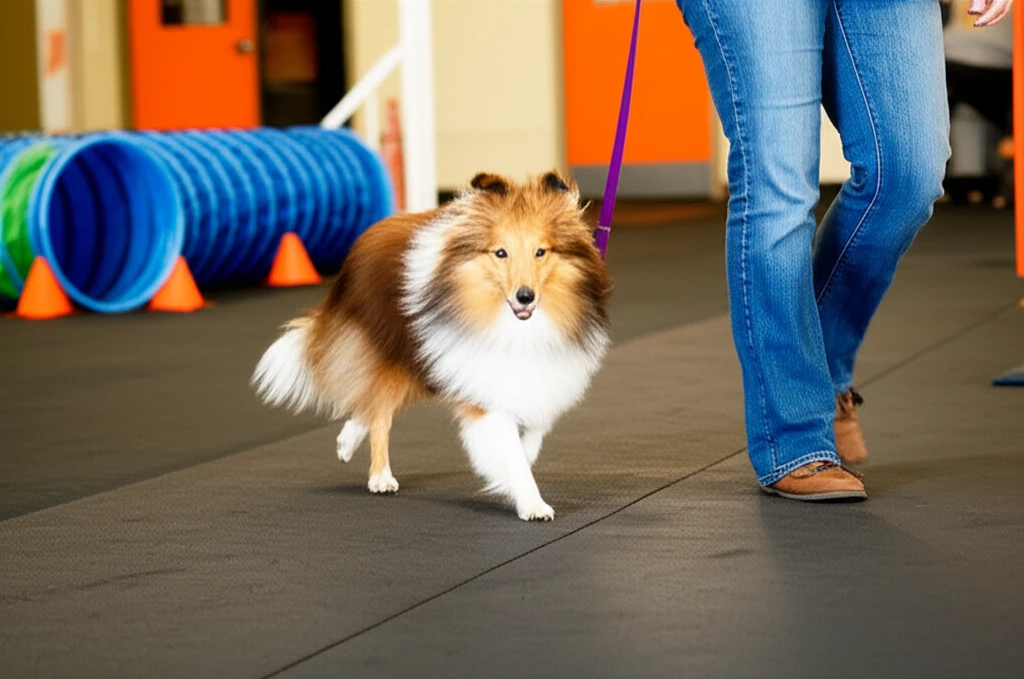
The Barking Is the Breed
Before anything else, you need to understand this: Shetland Sheepdogs bark. It's not a training failure. It's not a behavioral problem you can eliminate. Alert barking is woven into the breed's DNA. Shelties were developed to herd sheep on the Shetland Islands, where part of their job was to vocally alert farmers to predators, stray animals, and anything out of the ordinary. Your Sheltie is doing exactly what generations of selective breeding designed them to do.
The goal isn't to silence your Sheltie — that's a fight you'll lose and it will damage your relationship in the process. The goal is to give the barking a structure and a resolution. Teach an acknowledge-and-redirect protocol: when your Sheltie alerts, calmly say "thank you" to acknowledge the signal, then cue an incompatible behavior — a hand touch, a sit, going to a mat. Reward the redirect generously. Over time, the barking sequence becomes: alert, get acknowledged, perform the redirect, get rewarded. The barking becomes shorter and more manageable because your Sheltie has a clear path from "I noticed something" to "I've been heard."
What doesn't work: yelling (your Sheltie interprets this as you joining the alarm), squirt bottles or other aversives (these create anxiety in a breed that's already sensitive, making the barking worse), or ignoring it entirely (the barking is self-reinforcing because the trigger eventually leaves, convincing your Sheltie that barking worked). The redirect approach works because it respects the instinct while giving you a way to manage it.
Herding Drive in a Suburban Body
Your Shetland Sheepdog has a herding brain running on herding software. Without an outlet, that drive expresses itself in ways you didn't plan for: circling and nipping at children's heels, body-blocking other dogs at the park, chasing joggers and cyclists, or obsessively trying to organize the household into a tidy group. These behaviors aren't bad manners — they're a working instinct looking for a job.
Impulse control training is essential for Shelties, not because they lack self-control but because their herding instinct creates powerful urges that need a trained response. Teach a solid "leave it" and a reliable recall as your foundation cues. Practice these in gradually more distracting environments so your Sheltie can override the herding urge when needed. A Sheltie who sees a child running and can choose to check in with you instead of chasing has learned genuine self-regulation — and that's a skill that makes daily life dramatically easier.
Then give the drive a real outlet. Agility is practically tailor-made for Shelties. It combines the physical movement, handler communication, and rapid decision-making that mirror herding work. Shelties consistently rank among the top agility breeds because the sport channels everything they were built for. Trick training is another excellent option — Shelties learn complex behavior chains faster than almost any breed, and the mental engagement is deeply satisfying for them. If your Australian Shepherd friends rave about agility, know that Shelties are equally built for it.
Sensitivity Is a Feature, Not a Bug
Shetland Sheepdogs are among the most sensitive breeds. They read body language with uncanny precision, pick up on your emotional state before you're fully aware of it yourself, and respond to subtle shifts in tone that other breeds wouldn't notice. This sensitivity is what makes them exceptional training partners — a Sheltie can learn from the slightest timing cue and adjust their behavior based on minimal feedback.
It also means that harsh handling devastates this breed. A raised voice, frustrated body language, or a single sharp correction can shut a Sheltie down for the rest of the training session — and sometimes longer. Shelties who are trained with pressure often become anxious, hand-shy, or reluctant to offer new behaviors because they're afraid of making a mistake. This is the exact opposite of what you want from a dog with this much potential.
Train your Sheltie with clear, consistent, positive feedback. Mark correct behavior the instant it happens — a clicker or a consistent marker word works beautifully with this breed because Shelties thrive on precise information. Keep your voice warm and your energy calm. If you're frustrated, end the session and come back later. Your Sheltie knows when you're annoyed, and training under that cloud isn't productive for either of you. The Pembroke Welsh Corgi shares some of this herding-breed sensitivity, though Shelties tend to be even more attuned to handler emotion.
Noise Sensitivity and Environmental Confidence
Many Shetland Sheepdogs are sensitive to sounds — thunder, fireworks, construction noise, even household appliances. This noise sensitivity can range from mild discomfort to full panic responses. It's partially genetic (the same acute awareness that makes them responsive herders also makes them reactive to sudden stimuli) and partially a socialization issue. Shelties who aren't exposed to a variety of sounds during puppyhood are more likely to develop noise fears later.
Prevention starts with early, positive exposure. During the critical socialization window, play recordings of common sounds — thunder, traffic, fireworks, appliance noises — at a low volume while your Sheltie puppy is eating or playing. Gradually increase the volume over days and weeks. The goal is for your puppy to associate these sounds with normal, positive experiences rather than encountering them as sudden, unexplained events.
For Shelties who already have noise sensitivity, the approach is desensitization: expose your dog to the triggering sound at a very low level — quiet enough that they notice it but don't react fearfully — and pair that exposure with high-value treats or play. Gradually increase the volume over many sessions as your Sheltie demonstrates comfort at each level. Rushing this process sets it back, so follow your dog's pace. A calm indoor environment, like a training facility, can be a helpful setting for working on environmental confidence because you control the stimuli rather than being surprised by them.
Channeling the Sheltie Brain
A Shetland Sheepdog with nothing to do is a Shetland Sheepdog who will find something to do — and you probably won't like their choice. Shelties need mental engagement the way retrievers need to carry things: it's a fundamental need, not a luxury. Bored Shelties bark more, develop repetitive behaviors, and can become anxious or destructive.
The good news is that the Sheltie brain is a joy to work with. These dogs learn tricks at remarkable speed, excel at scent work, and take to agility like they were born for it (because, functionally, they were). Build a rotation of mental activities into your daily routine: a short training session in the morning, a puzzle feeder at midday, a walk with nose work built in during the afternoon. Shelties don't need exhausting physical exercise — they need their brain engaged. A fifteen-minute session teaching a new trick will settle your Sheltie more effectively than a forty-minute walk.
At Zoom Room, our training programs include agility courses, trick training, and obedience classes that challenge Shelties at the level they need. Group classes also provide valuable socialization — your Sheltie practices focus and self-regulation around other dogs and people, which strengthens the skills that make daily life smoother. Find a Zoom Room near you and give your Shetland Sheepdog the mental workout they've been asking for.
Frequently Asked Questions
How do I stop my Shetland Sheepdog from barking so much?
You won't eliminate Sheltie barking — it's breed-typical alert behavior that's deeply hardwired. What you can do is manage it with an acknowledge-and-redirect approach. When your Sheltie barks, calmly acknowledge the alert with a consistent word like "thank you," then immediately cue a different behavior such as a hand touch or going to a mat. Reward the redirect. Over time, the barking becomes shorter because your Sheltie has a clear, rewarding path from alert to quiet. Avoid yelling, which your Sheltie interprets as you joining in, and avoid aversives, which create anxiety and make the barking worse.
Are Shetland Sheepdogs good for first-time dog owners?
Shelties can be excellent for first-time owners who are prepared for two things: the barking and the mental stimulation needs. They're eager to please, highly trainable, and bond deeply with their people. But they need daily mental engagement — training sessions, puzzle toys, or a structured activity like agility — and you need a plan for managing their vocal nature. First-time owners who enroll in group training classes from the start tend to do very well with Shelties because the classes provide both the training guidance and the socialization this breed needs.
What activities are best for Shetland Sheepdogs?
Agility is the standout activity for Shelties — it channels their herding instincts, athletic ability, and handler responsiveness into a structured sport where they consistently excel. Trick training is another great fit because Shelties learn complex behavior chains quickly and genuinely enjoy the process. Nose work and scent games engage their keen senses and provide excellent mental fatigue. Even basic obedience work, when made progressively more challenging, keeps a Sheltie engaged. The common thread is mental engagement — Shelties need to think, not just run.
Ready to Get Started?
Zoom Room offers agility, trick training, and obedience classes that are ideal for Shetland Sheepdogs. Our indoor environment gives you and your Sheltie a focused, distraction-managed space to train. Find a location near you.
Find a Zoom Room